A useful ADHD parent workshop gives caregivers a manageable task to practise. It does not ask a facilitator to solve every difficulty in a family or make treatment decisions in front of a group. Start by deciding what adults should be able to explain, notice or prepare after the session.
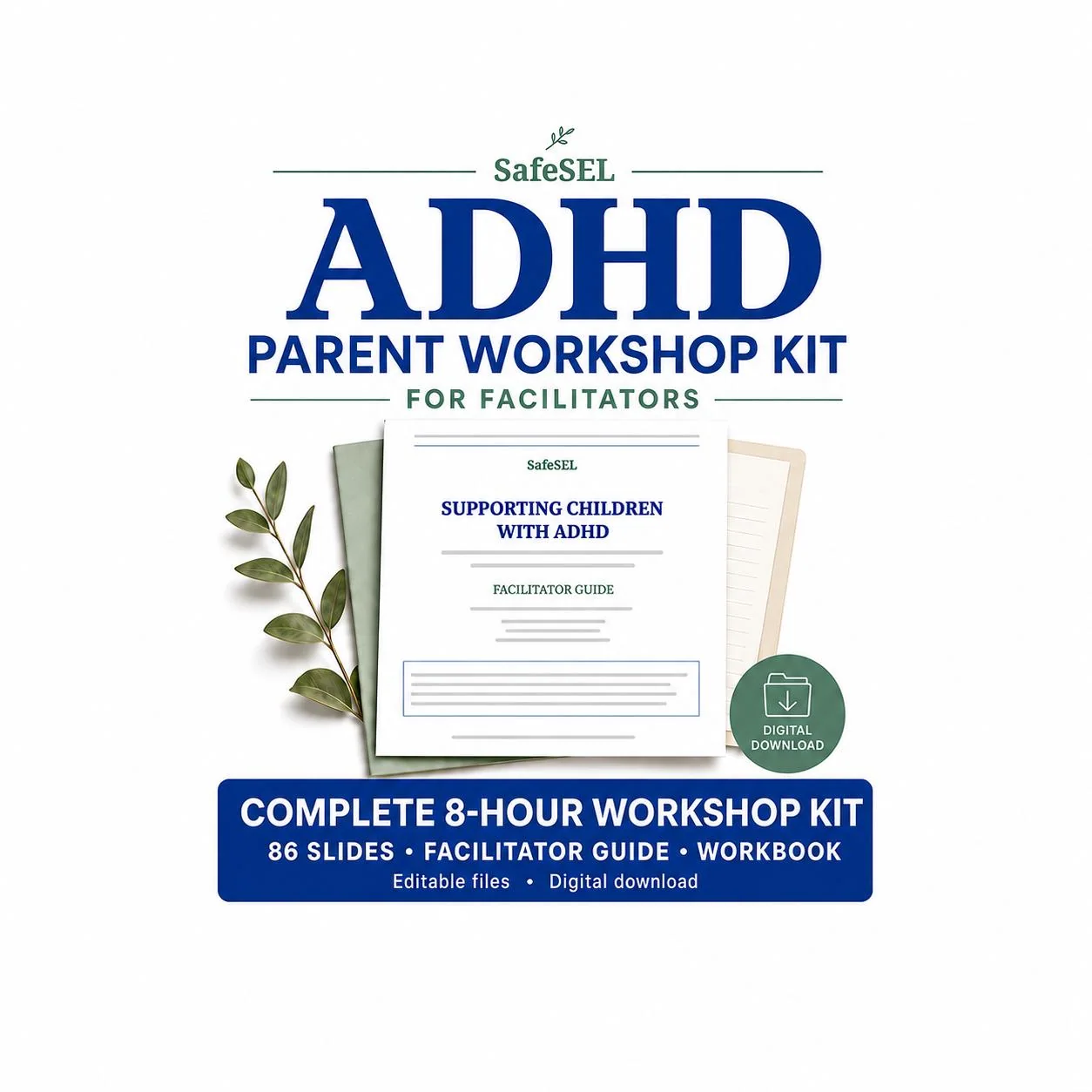
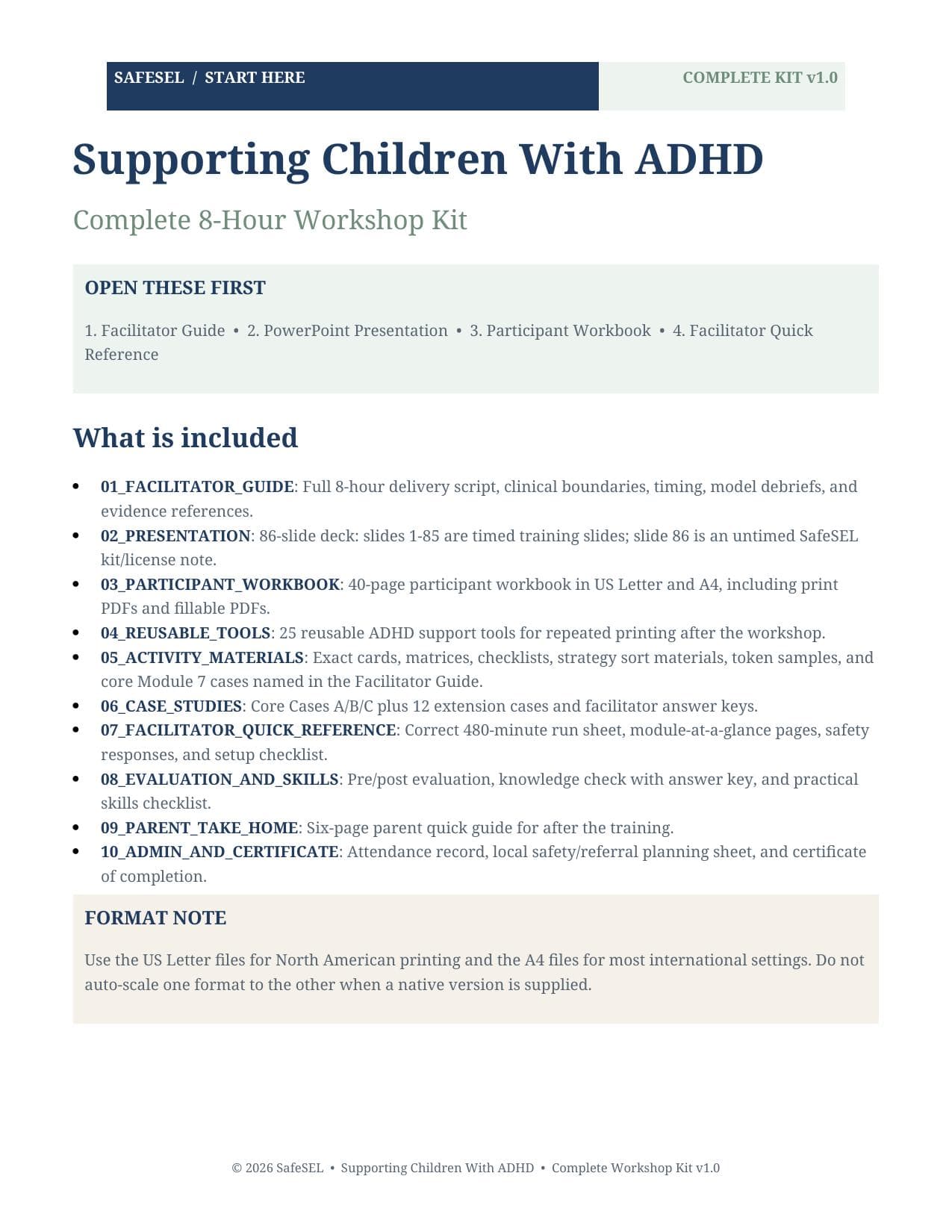
The Supporting Children with ADHD facilitator kit supplies teaching materials for an educational workshop. The purchaser prepares and leads the meeting. Families seeking individual assessment or treatment should contact an appropriate provider rather than buy facilitator files expecting clinical appointments.
Choose one observable learning goal
“Understand ADHD” is too broad to check at the end of a meeting. A narrower goal might be: participants can break a fictional morning instruction into separate actions and prepare a question about support. That gives the facilitator something concrete to demonstrate and the group something concrete to try.
Use the same goal in the invitation, opening slide and final reflection. Explain who is leading the session and what follow-up is available. A caregiver should know whether they are attending an introduction, a full workshop or one meeting within a longer series.
Keep education and treatment distinct
The CDC's explanation of parent training in behavior management describes a treatment involving a therapist, practice and progress review. A presentation and workbook do not establish that therapeutic relationship. Avoid calling a general information evening an equivalent treatment program.
Prepare a response to individual questions before opening discussion. For medication or diagnosis questions, acknowledge the concern and explain which professional can address it. For school support questions, identify the school's actual contact route. Do not promise a service that your setting does not provide.
Use a fictional morning routine
Write a short example: “Please get dressed, pack your bag and bring the permission slip.” Ask the group to identify the separate actions, what information the child would need and what adults would need to understand before choosing a support. Keep the discussion about the example rather than asking participants to disclose their child's history.
Then offer two possible instructions. One repeats the whole request more loudly. The other names a first step and checks that the needed item is available. Ask what changed in the adult's communication and what remains unknown. This is an observation exercise, not evidence that a particular technique will resolve a real child's difficulties.
Allow participants to write privately, discuss in pairs or observe. An activity should still work when someone chooses not to speak. Give pairs a clear stopping point and bring the discussion back to the learning goal instead of inviting unrestricted personal case consultation.
Prepare materials around the activity
Read the facilitator guide before selecting slides. Check that the workbook page uses the same example and that participants can understand its instructions without a long explanation. Print one test copy at the size you intend to use; check writing space, contrast and any words that need explaining.
The kit includes an eight-hour workshop format. If your school is offering a shorter introduction, identify which part you will deliver and describe that honestly in the invitation. Do not label a short selection of slides as completion of the full workshop. Use the parent education workshop planning guide to arrange timing, breaks, questions and follow-up.
Make the ending useful without demanding a pledge
Invite each participant to write one question for their child's support team or one adult action they want to consider. Participation and sharing should be optional. Avoid asking everyone to promise a change publicly or to report that their child is now easier to manage.
A short feedback question can check whether the instruction exercise was clear and whether participants know where to take individual concerns. It cannot establish a clinical outcome. If feedback identifies confusion, revise your explanation or examples before the next group.
Questions facilitators should settle in advance
Can teachers lead the workshop? The answer depends on their role, competence and the scope of the session. Educational materials do not expand a professional's authority to assess or treat. What happens when a parent describes a safety concern? Follow your setting's safeguarding or emergency procedure and arrange an appropriate private response.
Does buying the kit provide accreditation or continuing education credit? Do not advertise either unless a separate, verified arrangement exists. SafeSEL supplies facilitator resources. Compare the parent workshop kits and read the ADHD treatment and workshop support guide before deciding which kind of support you need.