A trauma-informed parent workshop should not require families to share traumatic experiences. Plan the room, instructions and participation choices before selecting a discussion activity. The workshop's educational scope needs to be clear enough that participants know what will happen and where personal concerns can be addressed.
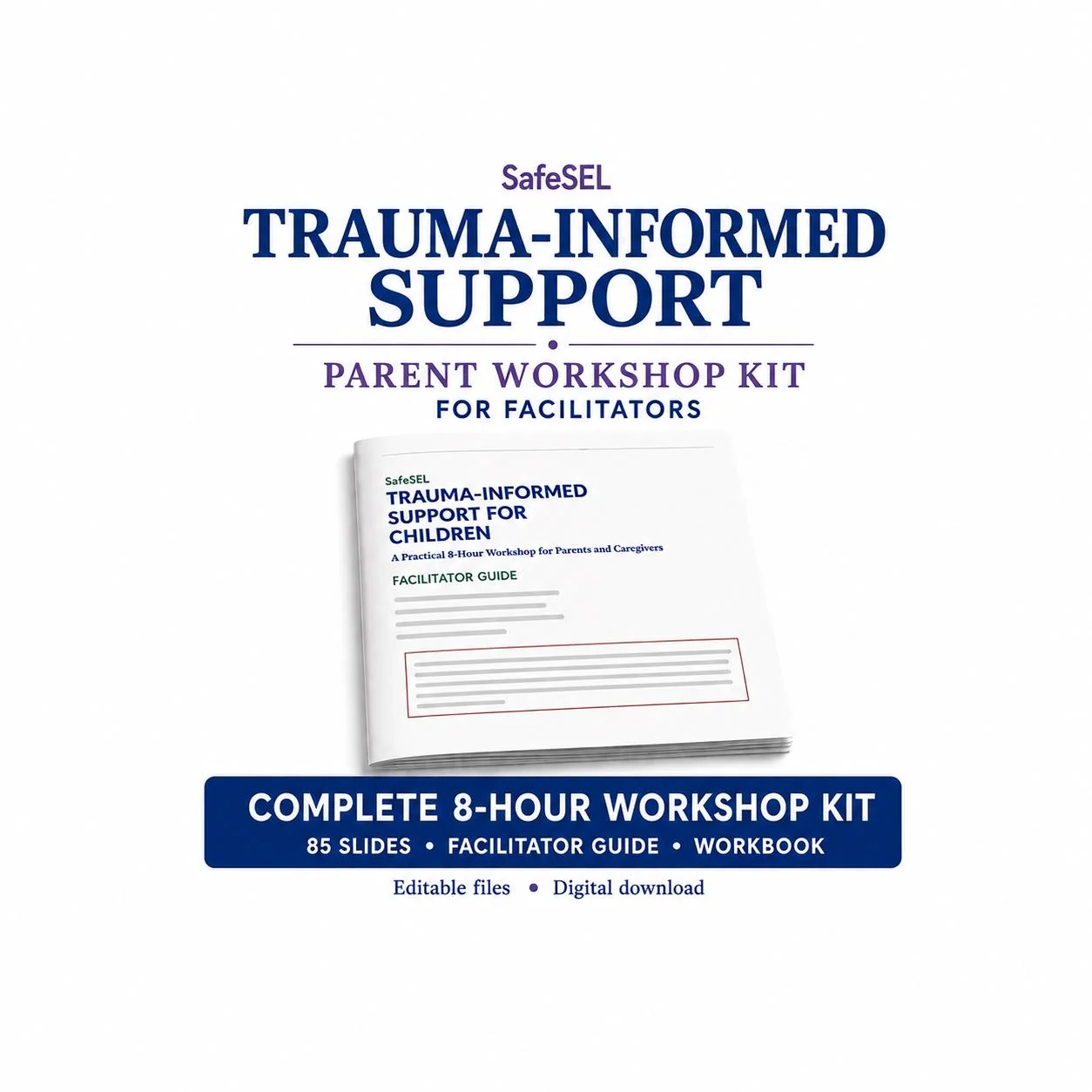
The Trauma-Informed Support for Children kit supplies materials for a facilitator-led workshop. It is not trauma processing, an individual assessment or a qualification. The National Child Traumatic Stress Network's school resources provide broader context for trauma-informed systems; purchasing workshop files does not make a school such a system by itself.
Make the session predictable
Show an agenda with the start, breaks, activities and finish. Explain whether questions can be asked during teaching or at a separate point. Identify the contact person for accessibility needs and tell participants how to step out without needing to explain publicly.
Read activity instructions aloud and provide them in a usable written form. Keep the purpose and stopping point visible. If plans change, explain the change before beginning the next task. These are delivery choices the school can review, rather than promises about how every participant will feel.
Offer participation choices
Design each exercise so someone can observe, write privately or discuss the fictional example. Do not make disclosure a condition of participation. Avoid prompts asking for the most upsetting event in a family's life or invitations to reenact a distressing incident.
State the limits of confidentiality, including the setting's safeguarding responsibilities. A general promise that everything stays in the room may be inaccurate. Explain how a participant can raise a concern privately and what the facilitator can reasonably offer within their role.
Use an everyday fictional school example
Describe an unexpected change in a pupil's routine. Give the group a brief school message explaining the change. Ask participants which information the message provides, which assumptions it makes and what the family might need to ask next.
Invite a rewrite that makes the next step clearer and names a contact route. This keeps the activity about communication and planning. It does not ask participants to infer whether the fictional pupil has experienced trauma or suggest that every difficulty should be interpreted through that lens.
For a second round, ask which details should be communicated privately rather than included in a general notice. Focus on the school's actual information-handling procedures. Do not create a workshop exercise that collects sensitive family histories without a defined purpose and appropriate arrangements.
Keep safeguarding separate from group discussion
Know the local procedure before delivery and identify the responsible person. If a participant raises an immediate concern, follow that procedure. Do not investigate it in front of the group or invite other participants to propose an intervention.
Prepare a short acknowledgement and a practical contact route. The exact response depends on the concern, your role and local requirements. Workshop materials cannot replace professional judgment or the setting's safeguarding policy. Do not advertise crisis support that the event cannot provide.
Avoid collapsing related topics into one explanation
Anxiety, regulation and trauma-informed support can appear in the same school series while serving different learning goals. Use the anxiety and trauma workshop guide to keep those concepts distinct. A school should not infer a child's history from a behavior described during a parent evening.
The school workshop planning page helps match the session to family engagement needs and delivery logistics. Decide whether you are running an introduction, the full workshop format or a recurring series, and describe that choice clearly to families.
Review the delivery rather than private histories
Ask whether instructions were understandable, whether participants knew their options and whether the contact route was clear. Do not ask feedback respondents to disclose experiences to prove that the session was relevant. Keep the feedback useful for improving your next meeting.
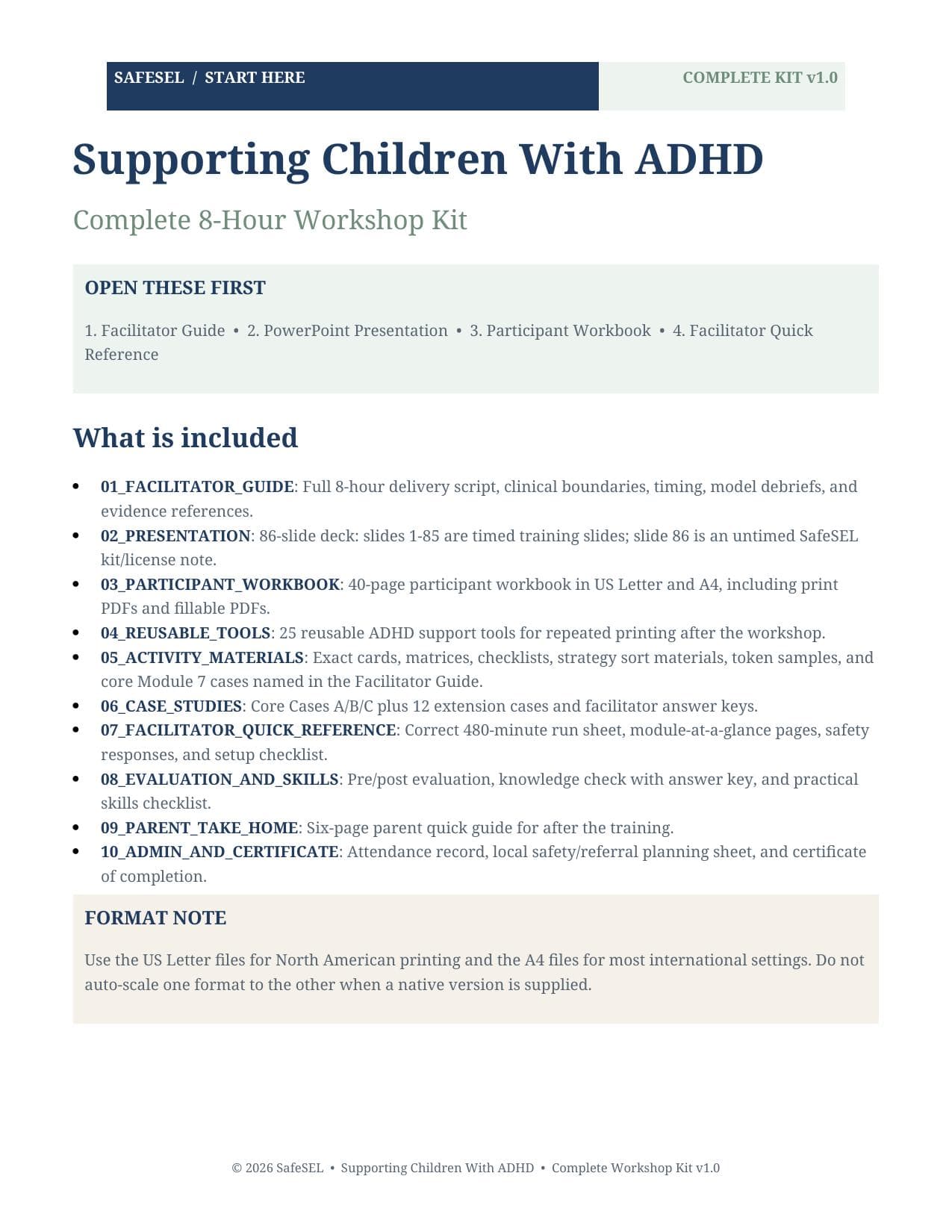
Read the facilitator guide, check sample pages and test the room before the event. Use the parent education workshop planning guide for timing and preparation. The kit's eight-hour format should not be advertised as completed after a short selection of activities.
End with a clear boundary and a useful next step
Close by naming what the workshop offered: educational explanation, a fictional communication activity and information about available contact routes. Do not imply that participants have received trauma treatment or that the school has demonstrated clinical outcomes.
Compare the parent workshop collection when choosing materials. Check the license and your setting's requirements before delivery, and keep personal support decisions with the appropriate family members and professionals.
Sources and further reading
- Trauma-Informed Schools — National Child Traumatic Stress Network