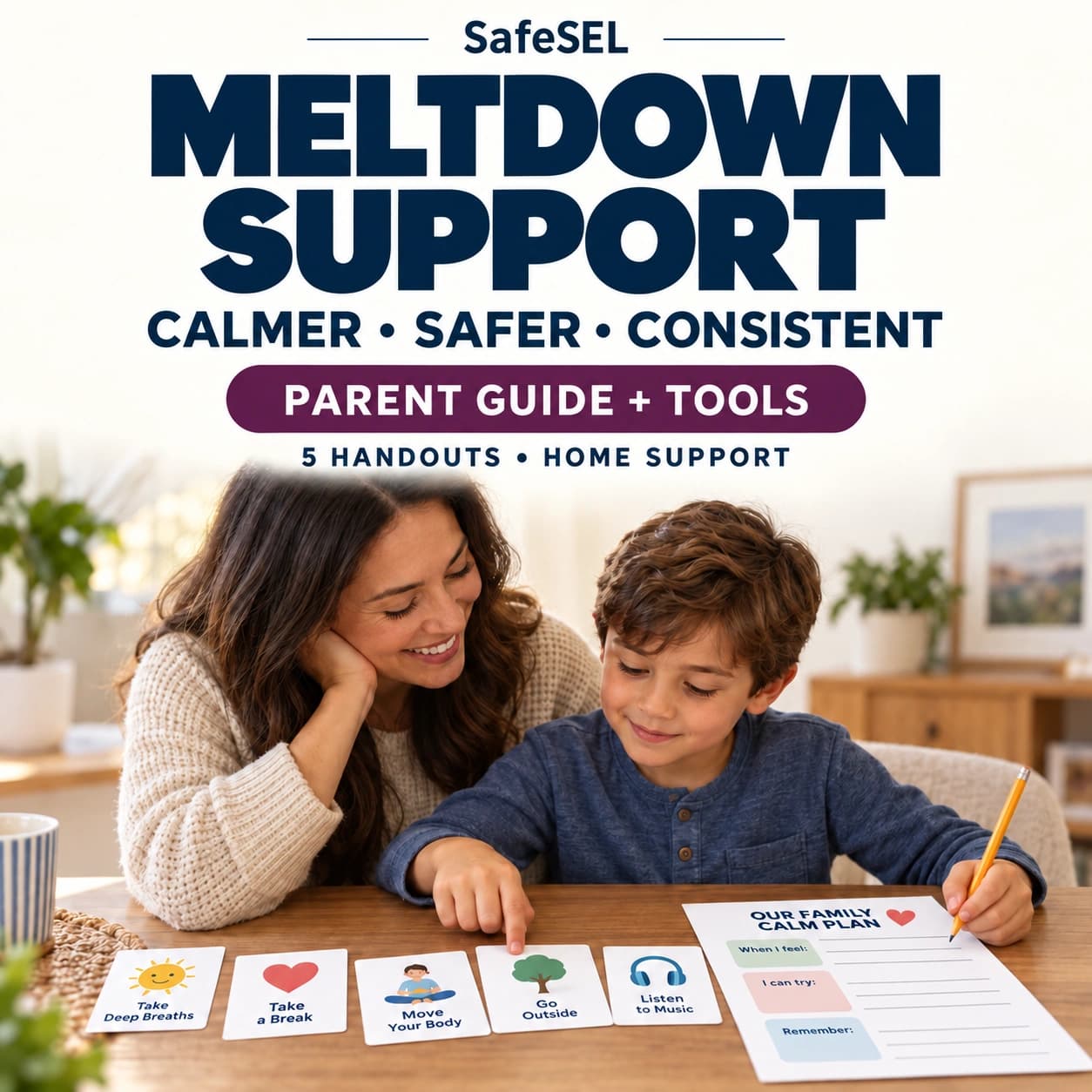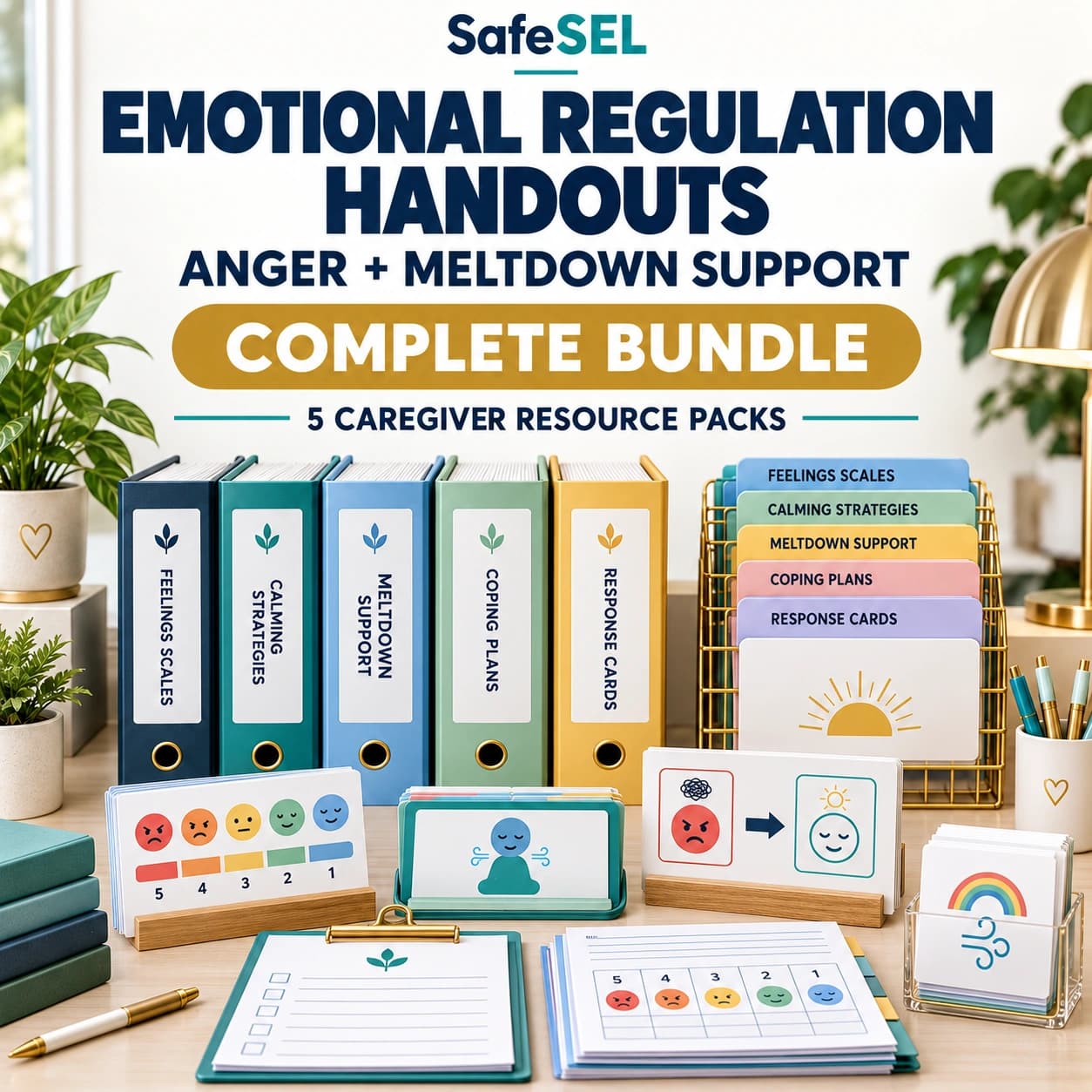
A useful big-emotions plan separates prevention, the peak of escalation and recovery. Beforehand, reduce predictable overload and teach skills when the child is available. During escalation, use less language, protect safety and avoid adding demands. Afterward, reconnect, review briefly and change one part of the plan.
Before: identify demands that reliably exceed capacity
Look for timing, hunger, fatigue, transitions, sensory load, unclear instructions, social stress and tasks that require more executive support than adults realize. This is not an attempt to remove every frustration. It is a way to stop treating predictable overload as a surprise.
Choose one preventive change: earlier warning, fewer steps, a visual sequence, food before homework, a quieter transition or a choice between two acceptable options. Test one change before redesigning the whole day.
Before: practise one skill when calm
A child cannot learn a five-step coping routine while already overwhelmed. Practise a short action during an ordinary moment: notice one body signal, ask for a pause, move to a safer space or use a prepared phrase.
Keep practice brief and realistic. The skill should help the child communicate or recover, not become another standard they are blamed for failing to use.
During: protect safety and reduce language
At the peak, state the immediate boundary in a calm sentence: “I will not let you hit,” or “We are moving away from the stairs.” Remove unnecessary questions and explanations. Repeating a lecture more loudly rarely restores access to reasoning.
Offer only choices the child can actually use. Some children want proximity; others need space. Follow the safety plan and seek emergency support when there is imminent danger, serious injury or a risk the family cannot manage.
After: reconnect before conducting a review
Recovery is not the same as readiness for a detailed conversation. Begin with ordinary care: water, food, quiet, contact if welcomed and a return to predictability. A forced apology immediately after escalation can produce compliance without understanding or repair.
Later, review one small part: What was the first sign? What made it harder? What helped recovery? What should the adult do next time? Keep the discussion short enough that the child can participate.
Change the plan without excusing harm
Understanding overload does not erase safety boundaries. Adults can hold a limit, support repair and still investigate why the situation exceeded capacity. Consequences should be connected, proportionate and delivered after regulation, not invented in anger.
If aggressive episodes are frequent, severe, sudden, occurring across settings or linked to major impairment, seek individualized assessment. Parent resources can organize observations and responses; they cannot determine the cause on their own.
Communication skills for parents include planning for your own overload
Parent frustration belongs in the plan too. Identify an early sign that your words are becoming sharper or faster, then choose a safe response you can actually use. If another responsible adult is available, agree how a handover works. Do not leave a child without the supervision their age, needs and situation require.
Support for parents might mean preparing one clear sentence, sharing routine responsibilities or seeking professional guidance when conflict is frequent. Afterward, separate the adult’s repair from the child’s behavior: ‘I shouted. That was not helpful. I will try a shorter instruction.’ You can acknowledge your part while retaining the original safety boundary.
A practical next step
For a structured set of materials, see the Big Emotions, Anger & Meltdowns Parent Bundle.
You can also browse parent and caregiver resources or continue with our
repair after a child meltdown.
Sources and further reading
- Tips for Connecting and Communicating — Centers for Disease Control and Prevention (2026)
- Communication Skills Start at Home — American Academy of Pediatrics / HealthyChildren.org (2023)