A strong professional workshop on child regulation and behavior moves from observation to function, capacity, context and adult response. It distinguishes ADHD-related executive demands, anger, aggression, overload and emotional regulation; uses cases rather than labels; and ends with a small implementation plan participants can use within their role.
Choose a learning sequence that prevents false shortcuts
Begin with what participants can observe, then introduce possible functions and capacity demands. Only after that should the workshop move to response strategies. Starting with a list of techniques invites participants to match a behavior to a tool without understanding the situation.
State clearly that similar behavior can arise from different needs. Shouting may occur during frustration, threat, sensory overload, communication breakdown or a learned coercive cycle. Training should improve questions, not create confidence in guessing.
Keep ADHD, anger and regulation connected but distinct
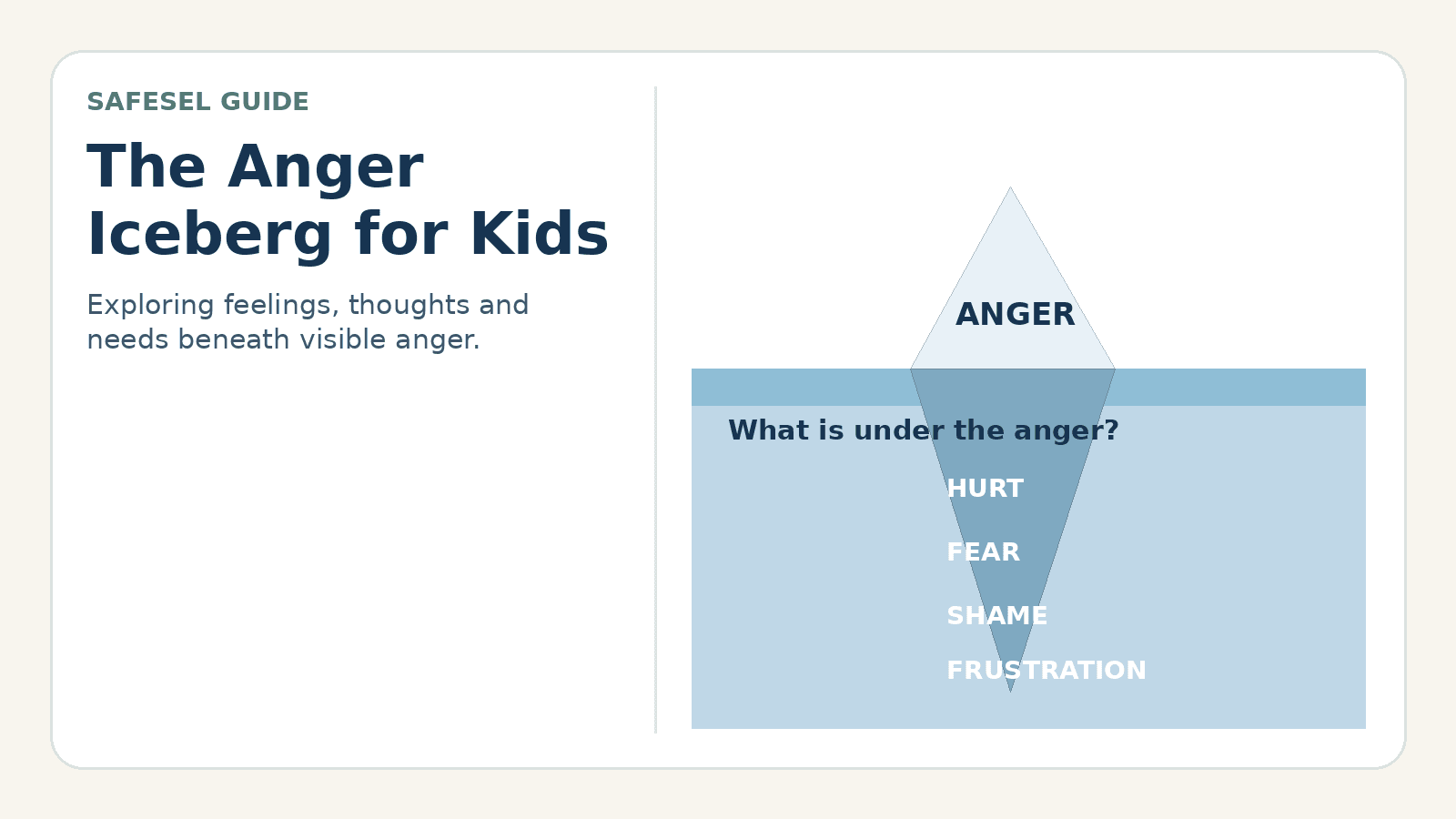
Executive-function difficulty can affect inhibition, working memory, time awareness and transitions. Anger is an emotion; aggression is behavior with safety implications. Emotional regulation involves noticing, modulation, recovery and access to support. These concepts overlap, but none is a synonym for the others.
Use one case across modules to show how the formulation changes when new information appears. Participants can compare what they would do before and after learning about sleep, task demands, sensory context or peer conflict.
Design practice around adult behavior as well as child skills
Include rehearsal of concise instructions, predictable transitions, validation with boundaries, environmental changes and post-incident repair. If every activity asks what the child should do differently, the training misses the systems that shape regulation.
Invite participants to identify which responses are available in their role. A teacher, parent educator and therapist may coordinate around the same child while holding different responsibilities and confidentiality boundaries.
Plan safety and scope before the difficult questions arrive
Facilitators should know how they will respond to disclosures, individualized clinical questions and examples involving imminent risk. Training materials need a clear educational scope and local referral information.
Do not use a workshop exercise to invite participants to disclose personal trauma or identifiable client details. Case discussion should protect privacy and remain proportionate to the learning goal.
Measure whether the workshop changes usable practice
Satisfaction ratings are not enough. Ask participants to identify one change they will make, one barrier they expect and one indicator they will review. Follow-up can examine whether the strategy was used, adapted or abandoned and why.
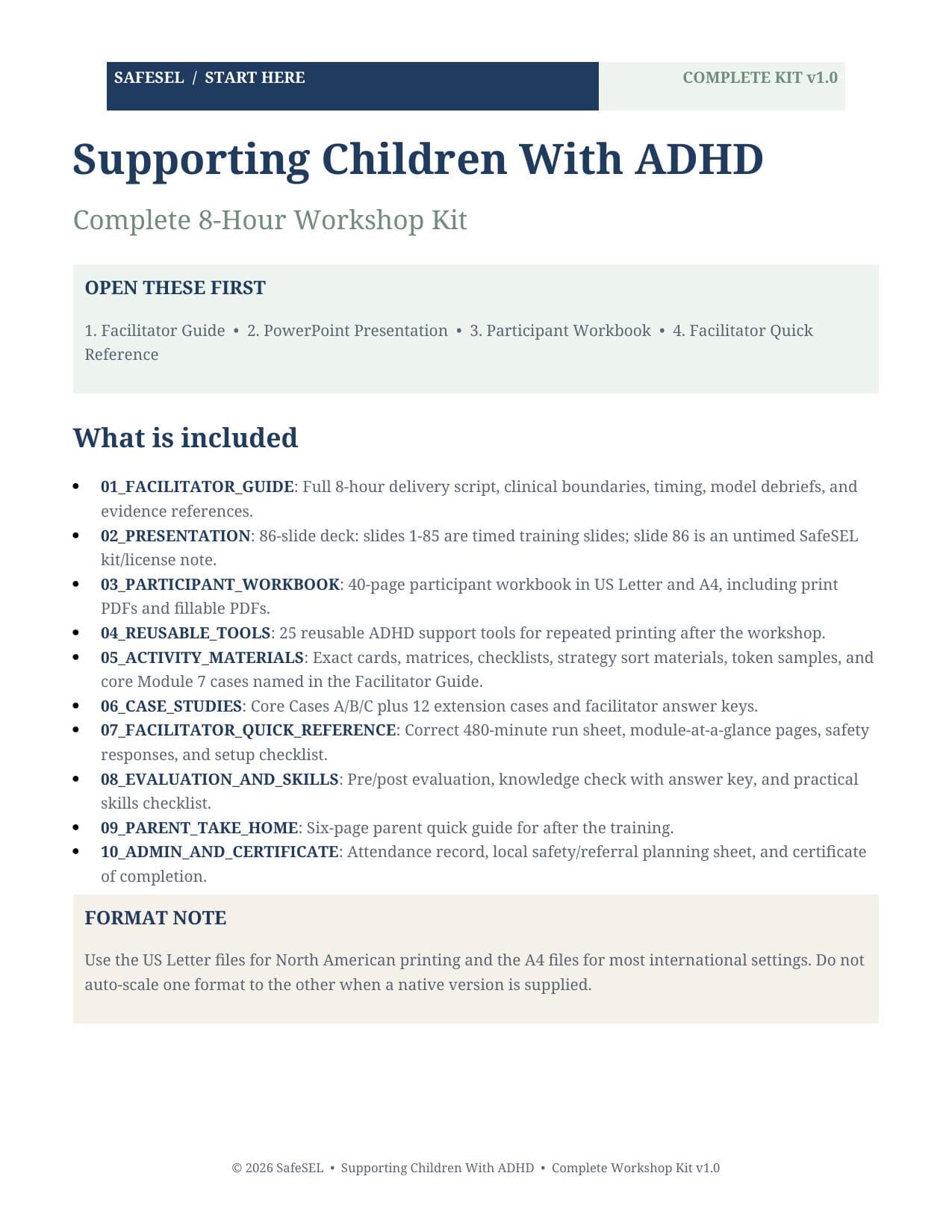
A ready-to-deliver kit saves preparation time, but the facilitator still owns adaptation, accessibility, local policy and competent delivery. Slides support teaching; they do not replace preparation.
Adapt teaching emotional regulation to the workshop participants
If a teacher or counselor facilitates a parent workshop, use examples caregivers can act on at home: giving an understandable instruction, preparing a transition or discussing repair later. Identify the professional as the facilitator and parents as the participants. Do not describe a ready-to-deliver workshop kit as clinical certification or an accredited course unless that status is independently established.
A behavior implementation plan at the end can be short: the situation, one adult action, support needed and a review point. Ask participants what might prevent them from trying it. The discussion should allow adaptations for disability, communication and family circumstances, rather than treating inability to follow a generic strategy as lack of commitment.
A practical next step
For a structured set of materials, see the Regulation & Behavior Professional Training Bundle.
You can also browse professional training workshop kits or continue with our
executive function difficulty versus defiance.
For teachers, counselors and other professionals preparing a caregiver group: see a practical parent workshop agenda and delivery checklist. This is an optional facilitator resource, not a step families need to purchase before seeking help.
Sources and further reading
- Comprehensive Psychiatric Evaluation — American Academy of Child and Adolescent Psychiatry (2026)
- Tips for Relying on Routines and Rules — Centers for Disease Control and Prevention (2026)