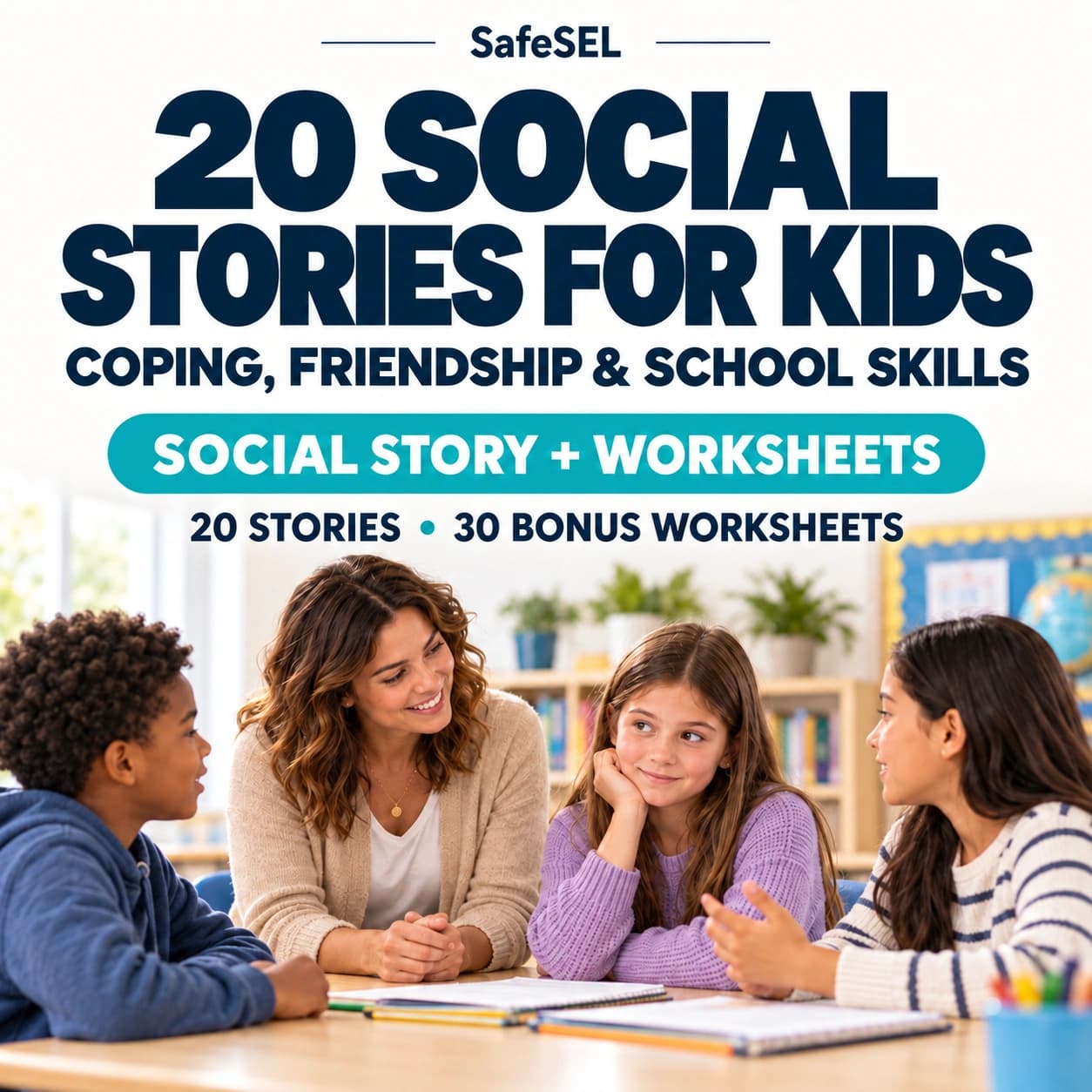
Social stories give children a clear, respectful explanation of what may happen in a situation and what choices are available. They work best as teaching tools used before a difficult moment, not as punishment after it.
What is a social story?
A useful social story describes a specific situation, relevant social or emotional cues and several safe responses. The language should be concrete, supportive and appropriate for the child’s age and communication needs.
Stories about friendship: connect reading with a useful next step
Stories about friendship can open a conversation about joining a game, a disagreement or feeling left out. Pause at one decision and ask what the character knows, what remains uncertain and who could help. Avoid insisting that a child disclose a similar personal experience to complete the activity.
SEL stories and other social emotional stories should be chosen for the actual situation and reading access. Read alongside the child, explain unfamiliar language and practise one relevant phrase afterwards. A generic story is not automatically an individualized Social Story or a solution to bullying; real concerns still need an adult response.
When social stories can help
Adults can use social stories to prepare for changes, practise friendship skills, explain boundaries, support emotional regulation and make unfamiliar school routines more predictable. Read the story when the child is calm and leave time for questions or alternative ways to respond.
How to choose a social story for a child
Choose one narrow goal and check that the story reflects the child’s real environment. Prefer neutral descriptions over blame, avoid promising outcomes that adults cannot guarantee and include options rather than demanding one scripted response.
Social story examples for everyday situations
Useful topics include joining play, handling mistakes, asking for help, waiting, repairing a friendship, coping with embarrassment and responding when plans change. A story becomes more practical when it includes words the child can say and one or two actions they can practise.
Using printable social stories effectively
Preview the story, personalise examples without changing its safety message and practise the skill in a low-pressure setting. Revisit it briefly when the situation is likely to occur. Track whether the child understands the options and can use them with less adult prompting over time.
What social stories cannot replace
A printable cannot replace individual assessment, relationship-based support or accommodations for sensory, communication and learning needs. If distress is frequent, intense or affects daily functioning, coordinate with the child’s family and appropriate professionals.
Related guide: Emotions & Feelings for Kids: Skills, Activities & Resources
Related guide: Repeated Teasing Disguised as “Just Joking”: What Adults Should Notice