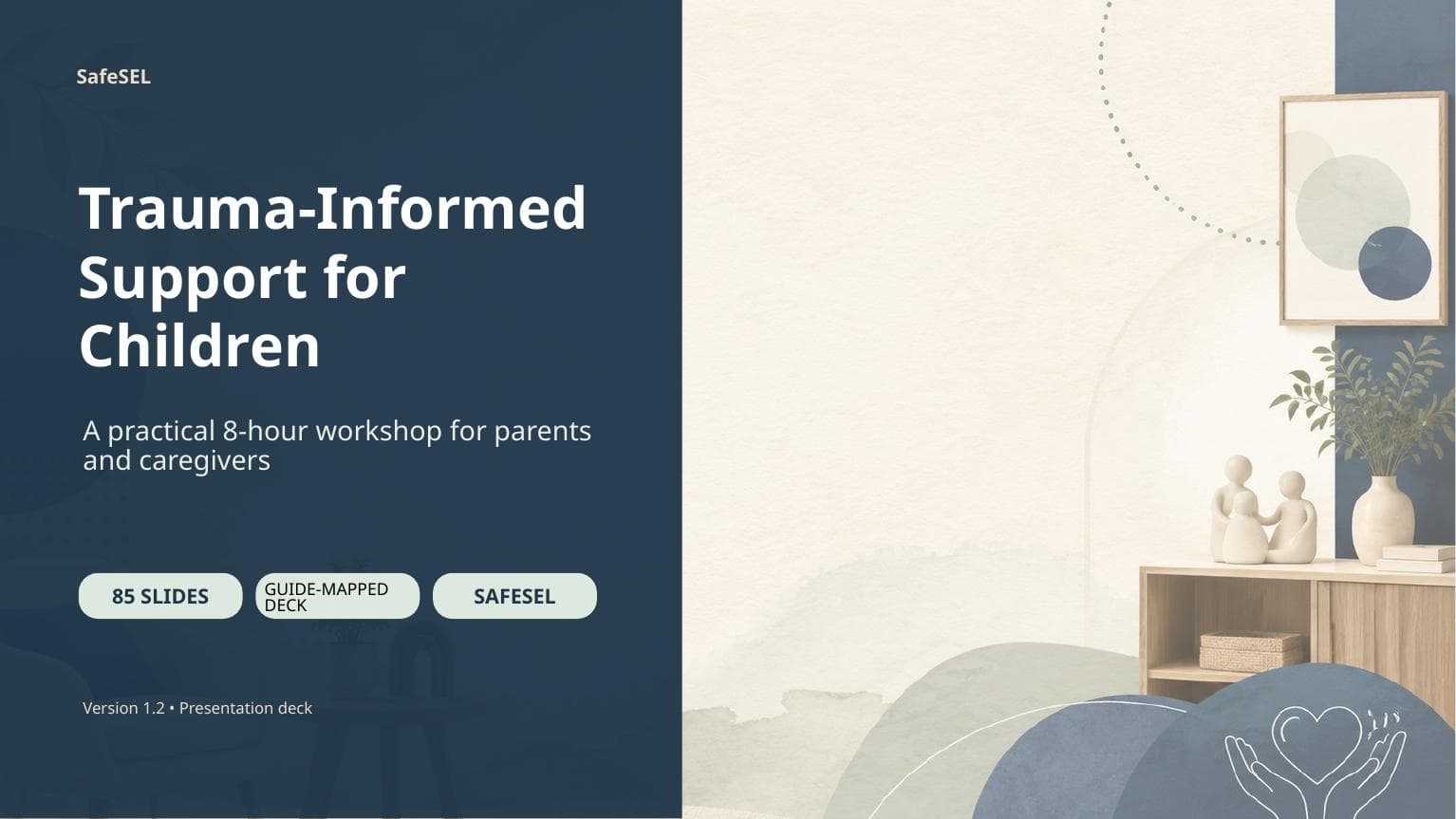
Anxiety and trauma-informed support belong in the same training only when their boundaries remain clear. Teach anxiety through fear, worry, avoidance, reassurance and impairment. Teach trauma-informed support through safety, predictability, choice, collaboration and attention to reminders. Do not imply that every anxious child has trauma or that general trauma-informed practice is trauma treatment.
Define the concepts before discussing overlap
Anxiety includes developmentally expected fears as well as patterns that may become persistent and impairing. Trauma exposure does not produce one universal response, and trauma-informed support is a way of reducing avoidable harm and increasing safety—not a diagnosis.
Participants need these distinctions early. Otherwise, ordinary worry can be overinterpreted, while serious traumatic stress may be reduced to a generic calming exercise.
Use parallel case maps
For anxiety, map feared outcomes, body responses, avoidance, reassurance, accommodation and functional impact. For trauma-related concerns, map reminders, perceived threat, changes in arousal or avoidance, meaning, safety and current context.
Then ask what information is missing. A good training case should resist instant certainty and show why assessment, medical care, safeguarding or specialist referral may be necessary.
Teach supportive responses that do not depend on diagnosis
Predictability, clear explanations, respectful choice, accessible communication and calm adult behavior can support many children. These practices are useful even when no trauma disorder is present.
At the same time, universal support should not be presented as sufficient treatment for significant anxiety, OCD or traumatic stress. Participants should leave knowing both what they can do and where their role ends.
Handle disclosure and safeguarding explicitly
Before the workshop, prepare language for responding when a participant shares a personal experience or identifiable case. Do not ask for public disclosure as an empathy exercise. Provide breaks, opt-out routes and local support information.
Clarify mandatory reporting, organizational procedures and emergency pathways relevant to the setting. A facilitator kit can prompt preparation, but local law and policy must determine the actual response.
End with differentiated implementation plans
Ask participants to write one anxiety-support action, one trauma-informed environmental change and one referral or consultation trigger. Keeping these columns separate helps prevent vague promises to “be trauma informed” from replacing concrete practice.
Review learning with scenarios that require participants to explain their reasoning, not select a slogan. The useful outcome is better observation, safer support and clearer escalation—not confidence in diagnosing from behavior.
An anxiety workshop needs an explicit boundary around trauma assessment
Use fictional cases to practise distinguishing an observation from a conclusion. ‘The child leaves when the room gets loud’ is an observation; the reason still needs investigation. Ask what the facilitator can change immediately, what information is missing and who is qualified to assess further. A workshop discussion is not a trauma assessment of either a participant or a child they describe.
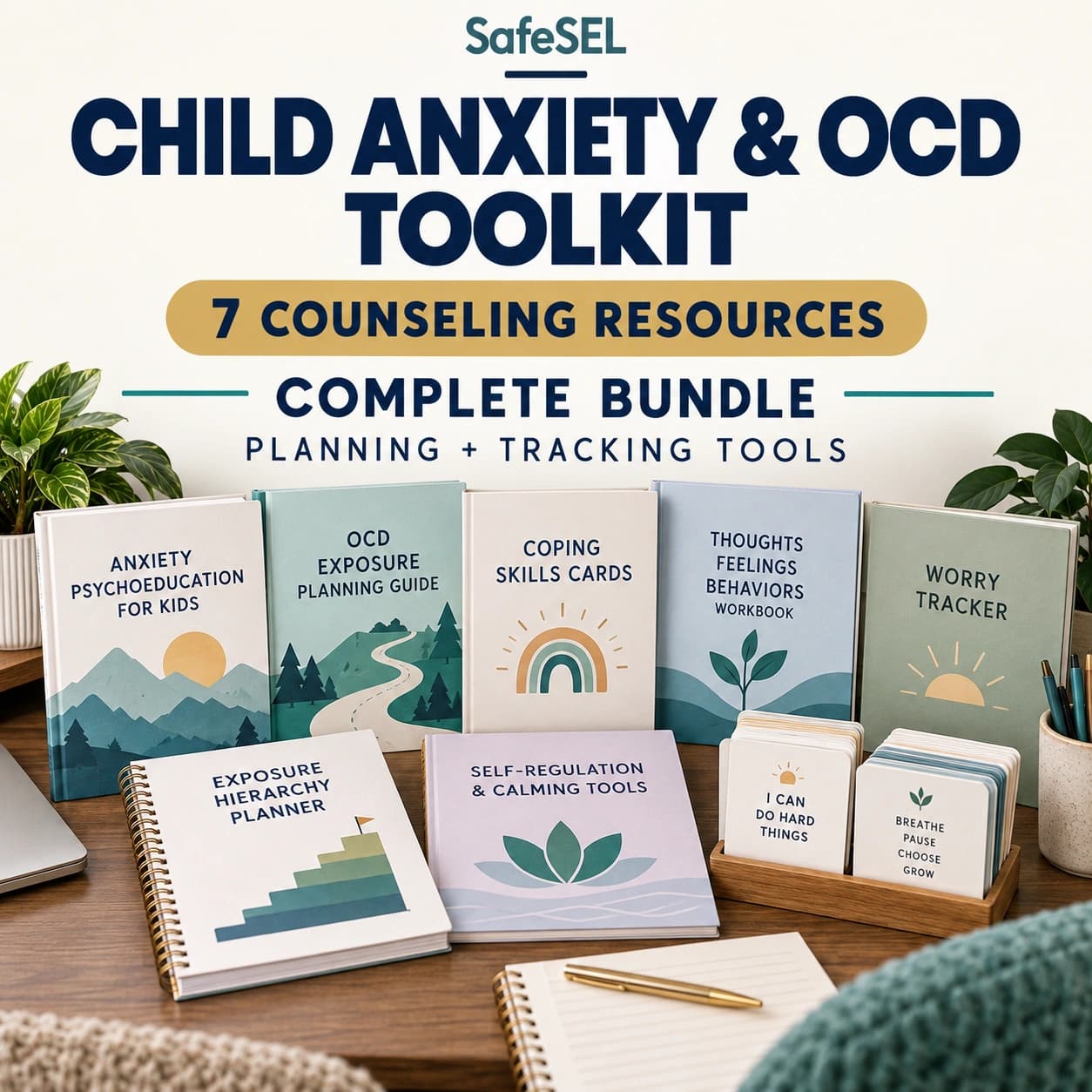
Introduce anxiety tools by their intended task: recording a pattern, preparing a conversation or making support predictable. Explain what the tool cannot establish. A completed worksheet does not prove a diagnosis or show that an environment is safe. Keep referral and safeguarding routes visible alongside practical strategies, not hidden in a final disclaimer.
A practical next step
For a structured set of materials, see the Anxiety & Trauma Professional Training Bundle.
You can also browse professional training workshop kits or continue with our
childhood anxiety or normal worry.
For teachers, counselors and other professionals preparing a caregiver group: see choosing parent workshop topics and safe learning goals. This is an optional facilitator resource, not a step families need to purchase before seeking help.
Sources and further reading
- Anxiety Disorders Resource Center — American Academy of Child and Adolescent Psychiatry (2026)
- Childhood Traumatic Grief: Information for Mental Health Providers — National Child Traumatic Stress Network (2019)