A parent workshop calendar is easy to fill and harder to make useful. Five broad titles can look impressive while leaving families unsure which evening is for them. Start with a situation parents recognize and one thing they should leave better prepared to do.
“Emotional regulation” names a field. “What can we say when a transition becomes an argument?” names a reason to attend. Use the second kind of language in the invitation, then explain the topic accurately inside the session. The examples below are planning suggestions, not a claim that every school needs the same five workshops.
Find out what families are asking before choosing a topic
Use a short, optional question such as: “Which part of the day would you most like support with?” Offer a private response method and a place for “something else.” Do not ask parents to disclose diagnoses or sensitive histories in a public sign-up form. Compare the themes with what school staff are hearing, while keeping individual families unidentifiable.
Attendance constraints matter too. Ask about timing, interpretation, access needs and whether a shorter meeting would be more practical. A popular topic at an inaccessible time is not an accessible offer. Keep participation separate from discipline processes: an invitation should not imply that a family is being summoned because their child is a problem.
Turn parent workshop topics into invitations families can recognize
Parent workshop topics for schools work best when the invitation names a practical situation. For example: “Getting out of the door without another argument” can introduce routines and adult responses; “Helping a worried child try a school activity” can introduce supportive conversations. These are examples of educational sessions, not promises that attendance will change a child’s behavior.
For each parent workshop, publish the intended audience, the question it addresses, who will facilitate and what participants take home. Let families ask about access or interpretation privately. Educational resources should support the session’s purpose, not become a long product presentation that displaces discussion.
ADHD: understanding demands and planning support
Choose this topic when caregivers want clearer language for attention, organization and school–home conversations. A useful learning goal is to describe one routine precisely and prepare a question for the child's support team. A fictional multi-step instruction makes a manageable group exercise.
Avoid promising diagnosis, medication advice or a complete behavioral treatment program. The ADHD parent workshop kit supplies facilitator materials, not a clinical service. For a fuller distinction, see ADHD parent training versus educational workshop support.
Anxiety: responding to worry without turning the group into assessment
An anxiety workshop can focus on how adults listen to a worried child, distinguish a general discussion from an individual concern, and identify when additional help is needed. Use a fictional example such as uncertainty about a school activity. Ask what the adult knows, what they do not know and what information the next conversation should gather.
Do not ask the group to decide whether a particular child has an anxiety disorder. Do not assume that reluctance means anxiety rather than a genuine problem in the environment. The anxiety workshop for parents is a topic-specific option for appropriately prepared facilitators.
Emotional regulation: making adult responses concrete
This topic fits questions about transitions, strong feelings and what support can look like before a difficult moment. An achievable session outcome is for caregivers to distinguish an immediate response from a later conversation. Ask participants to compare two fictional adult responses and explain what each makes possible, rather than vote for the “perfect parent.”
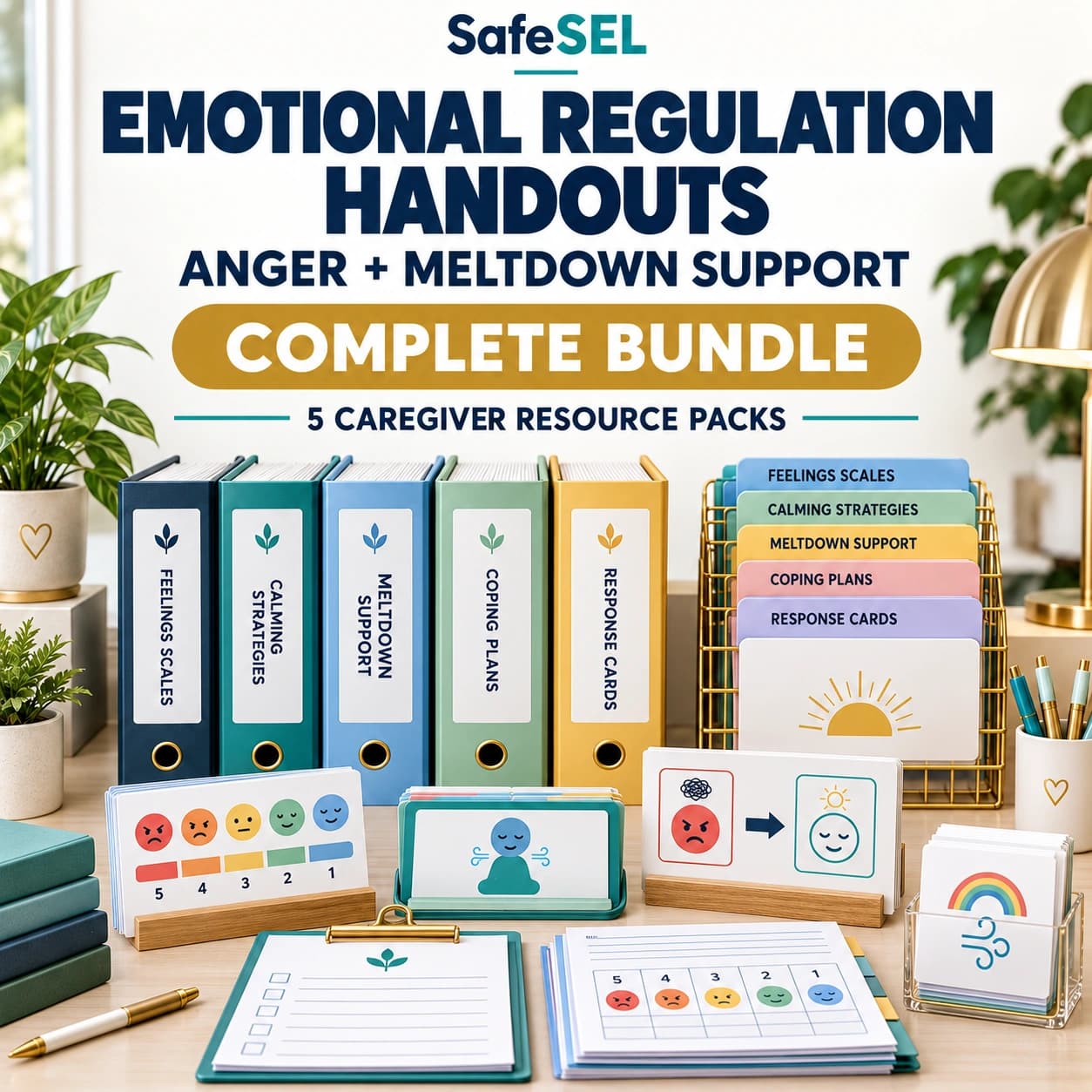
A short workshop is not a test of whether a caregiver can always remain calm. Leave room for constraints and repair. The emotional regulation workshop offers a coordinated guide, presentation and participant materials for this subject.
Anger and meltdowns: clarity about safety and follow-up
An invitation should specify that the focus is children's anger and adult support, not treatment for adults' anger. A useful educational aim is to separate immediate safety actions from discussion after an incident. Keep examples proportionate, and check local procedures before deciding which situations to use.
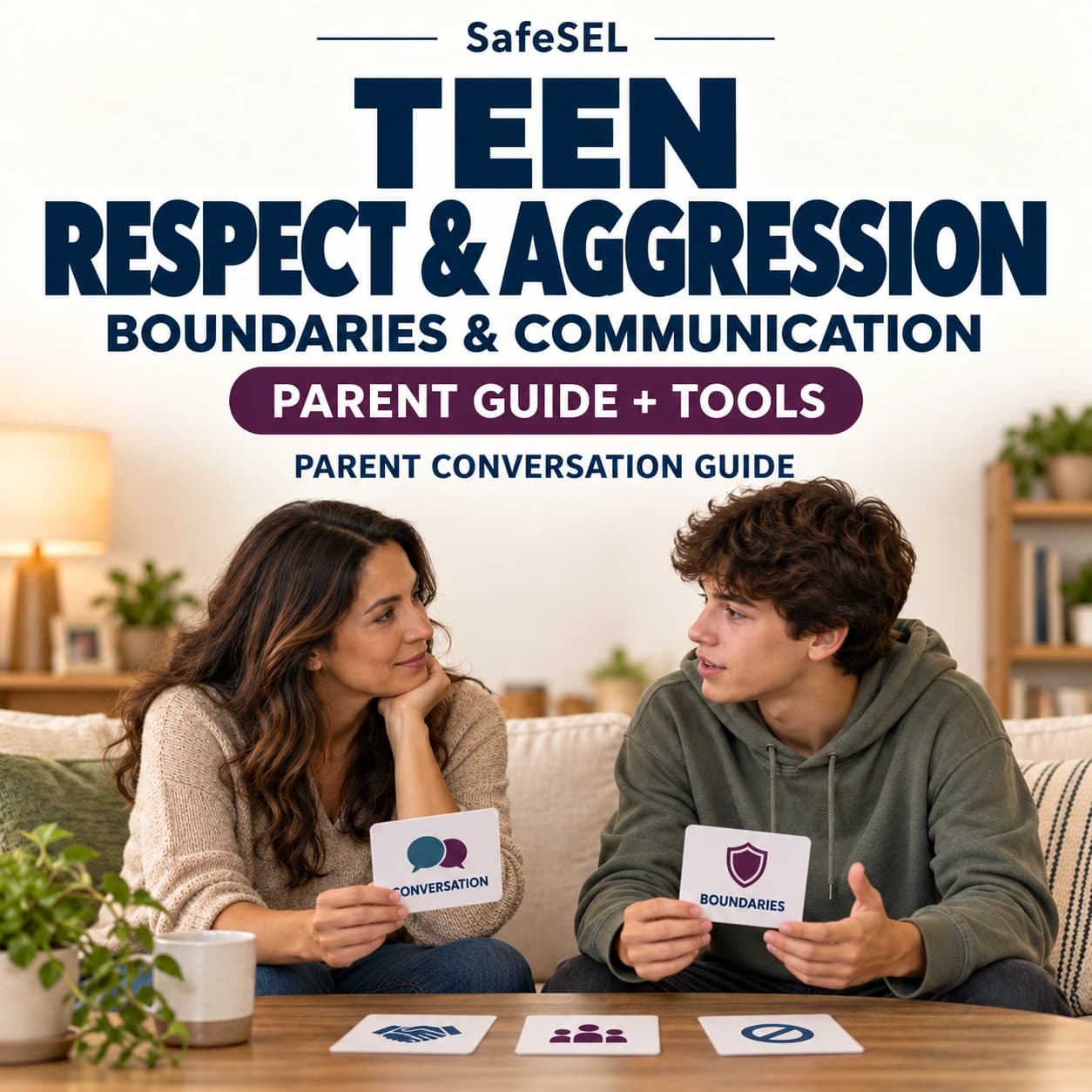
Do not invite live demonstrations of restraint, create a universal crisis plan or use a parent's distressing account as entertainment. The anger, meltdowns and aggression kit is intended for caregiver education with safety and scope boundaries.
Trauma-informed support: teach without requesting disclosures
This topic requires careful facilitation. A workshop can examine predictable communication, choice and supportive environments without asking anyone to recount trauma. Give participants a pass option and explain the limits of confidentiality before starting.
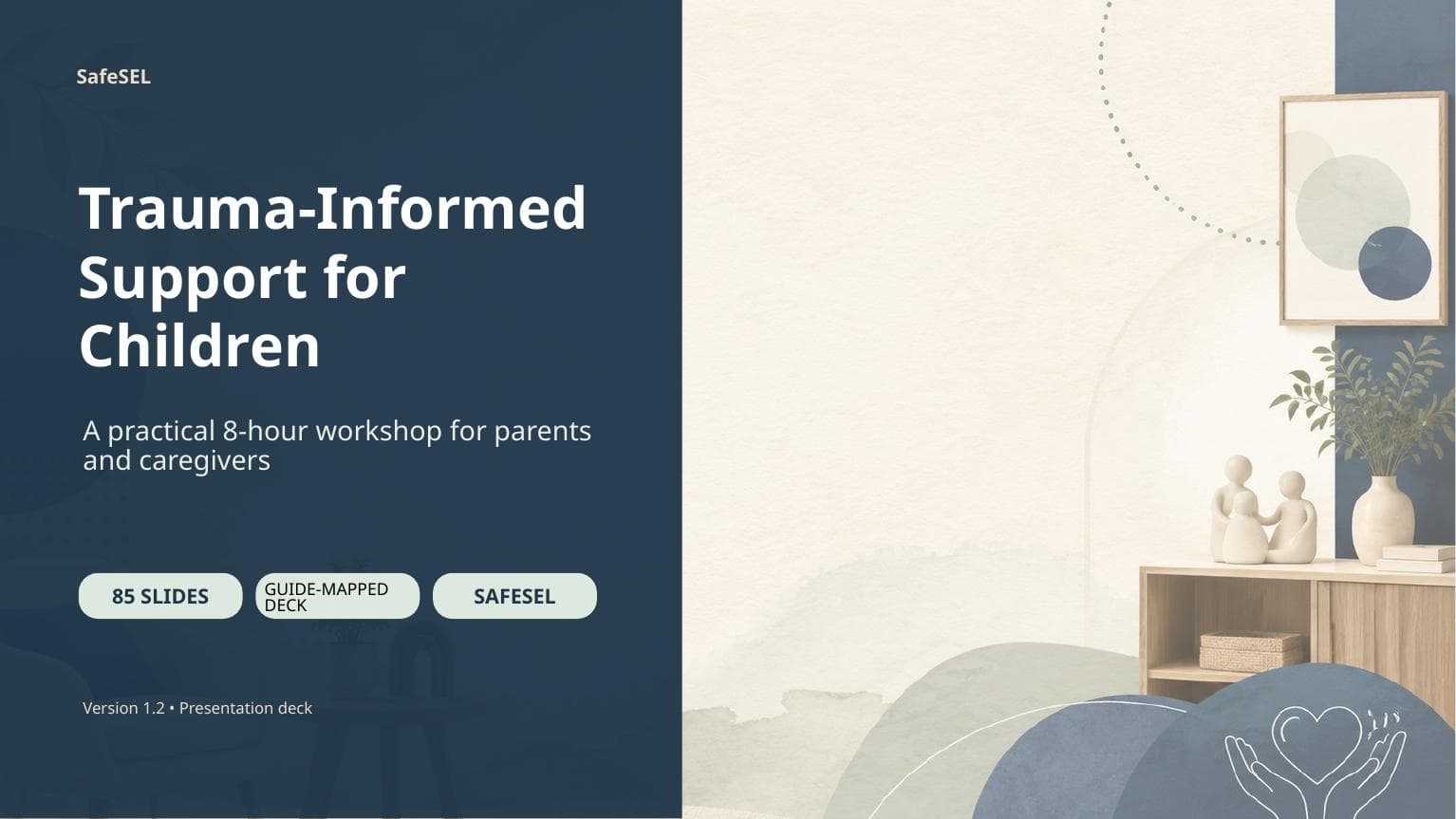
Use a neutral fictional scenario, such as a change in the day's schedule, instead of inviting personal trauma narratives. The trauma-informed parenting workshop does not qualify a purchaser to provide trauma therapy. If the facilitator cannot safely contain likely questions or disclosures, choose another topic or involve appropriately qualified support.
Choose one starting point, not five simultaneous campaigns
Compare candidate topics against three questions: Is there a clear request from families? Can the planned facilitator competently lead it? Can participants leave with one realistic next step? These are practical planning questions, not a validated scoring instrument. A topic with strong interest but no suitable facilitator is not ready to schedule.
For a small school, start with one session and a simple feedback method. Ask which part was useful, which question remains and whether the proposed next step fits everyday life. Do not infer improved child outcomes from positive satisfaction ratings. Use feedback to decide what to offer next rather than assuming the complete series must be delivered immediately.
Connect the workshop to an actual follow-up
Tell families who to contact afterward and distinguish general questions from individual support requests. A brief follow-up message can remind participants of the session's learning goal, point to agreed support contacts and invite feedback without requesting sensitive information by reply-all.
For a full delivery workflow, see how to plan and facilitate a parent education workshop. Compare all parent workshop kits or the five-topic parent education curriculum only after deciding what your group needs. Buying a larger collection is not a reason to teach every topic to every audience.