Worksheets
Self Control Worksheet for Kids
Ages 7–12PNG
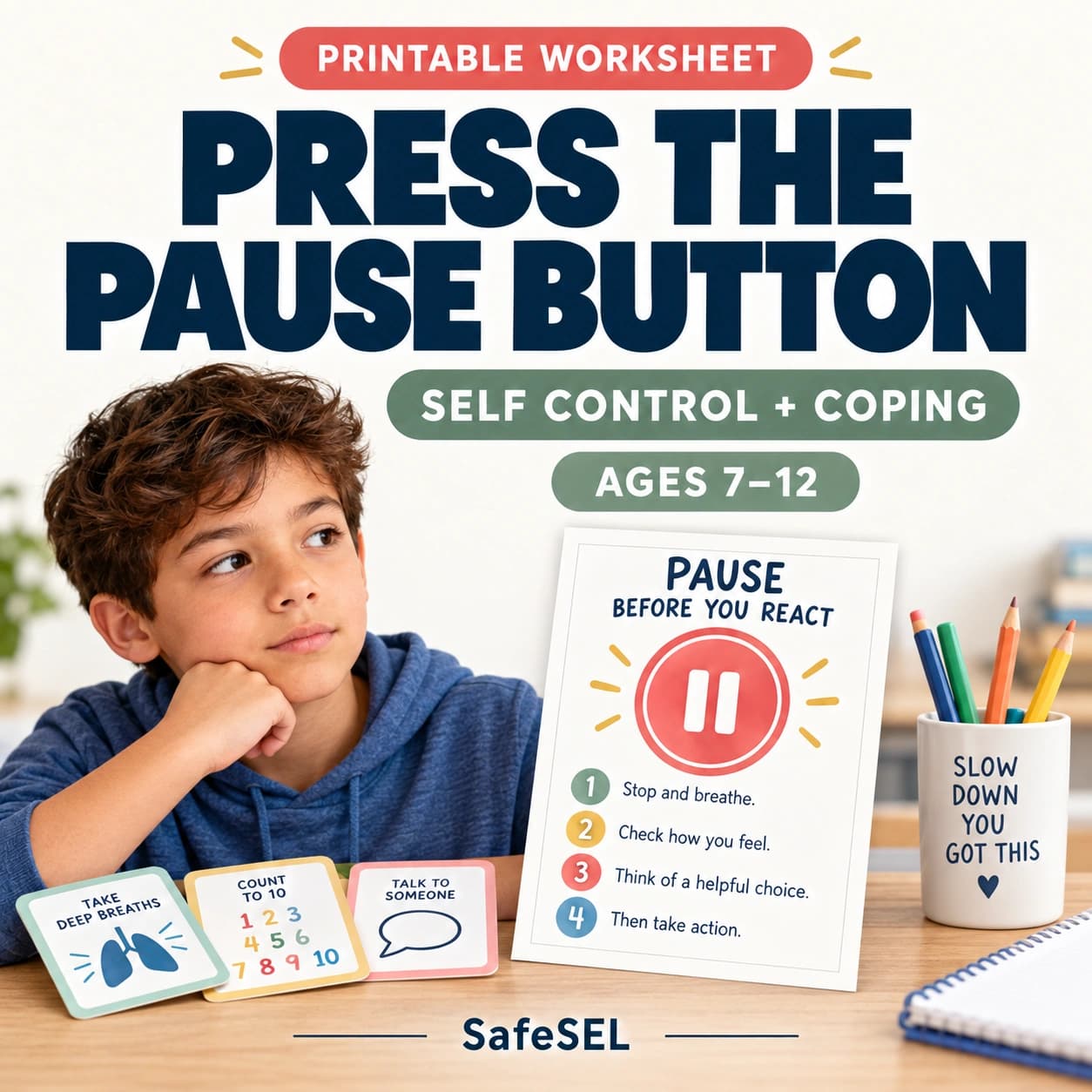
Self Control Worksheet for Kids: a print-ready worksheet for ages 7–12 with clear prompts for guided practice.
Find printable self-control and impulse-control worksheets that help children notice urges, pause, consider consequences and practise safer, more flexible choices.
Self Control Worksheet for Kids: a print-ready worksheet for ages 7–12 with clear prompts for guided practice.
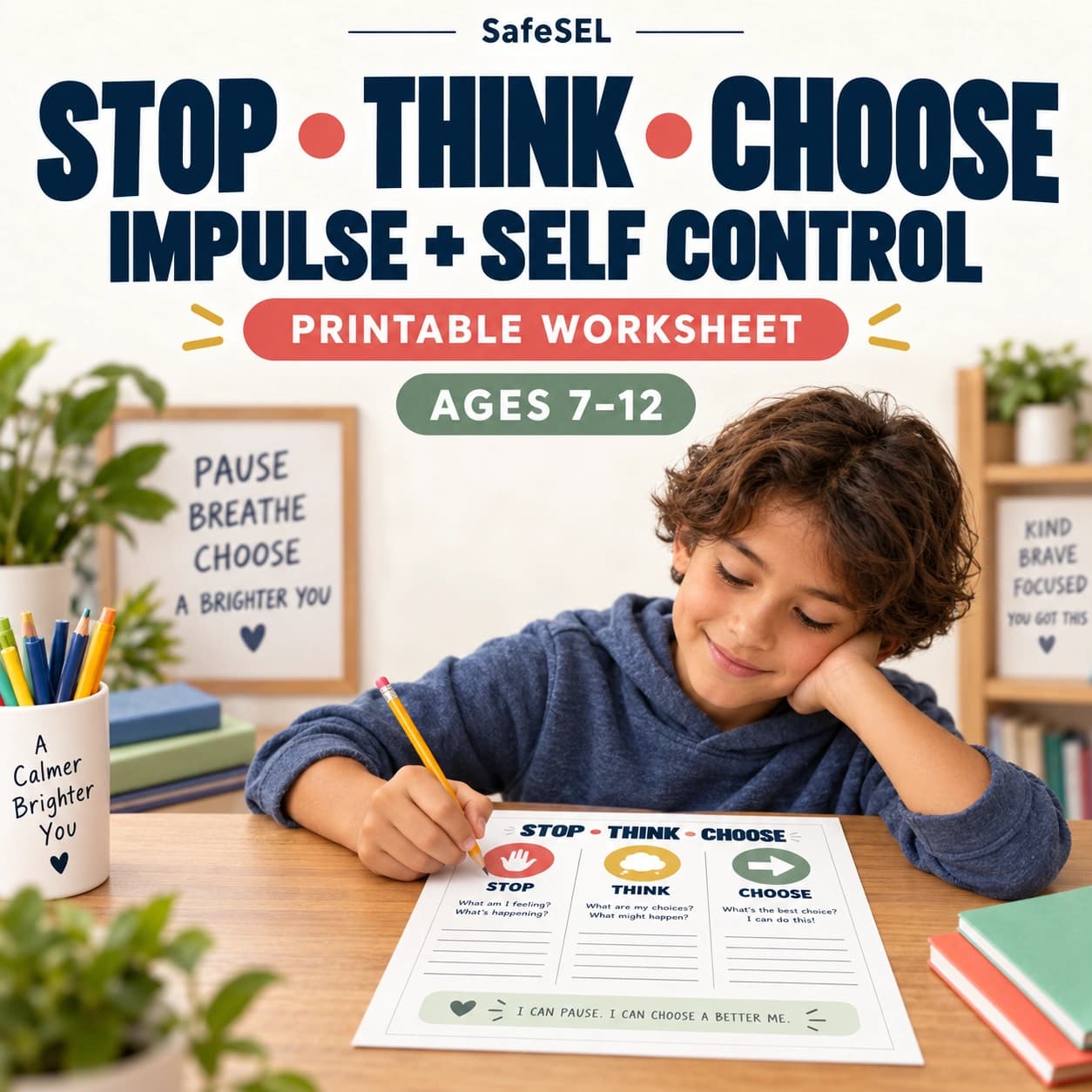
Stop Think Choose Worksheet: a print-ready worksheet for ages 7–12 with clear prompts for guided practice.
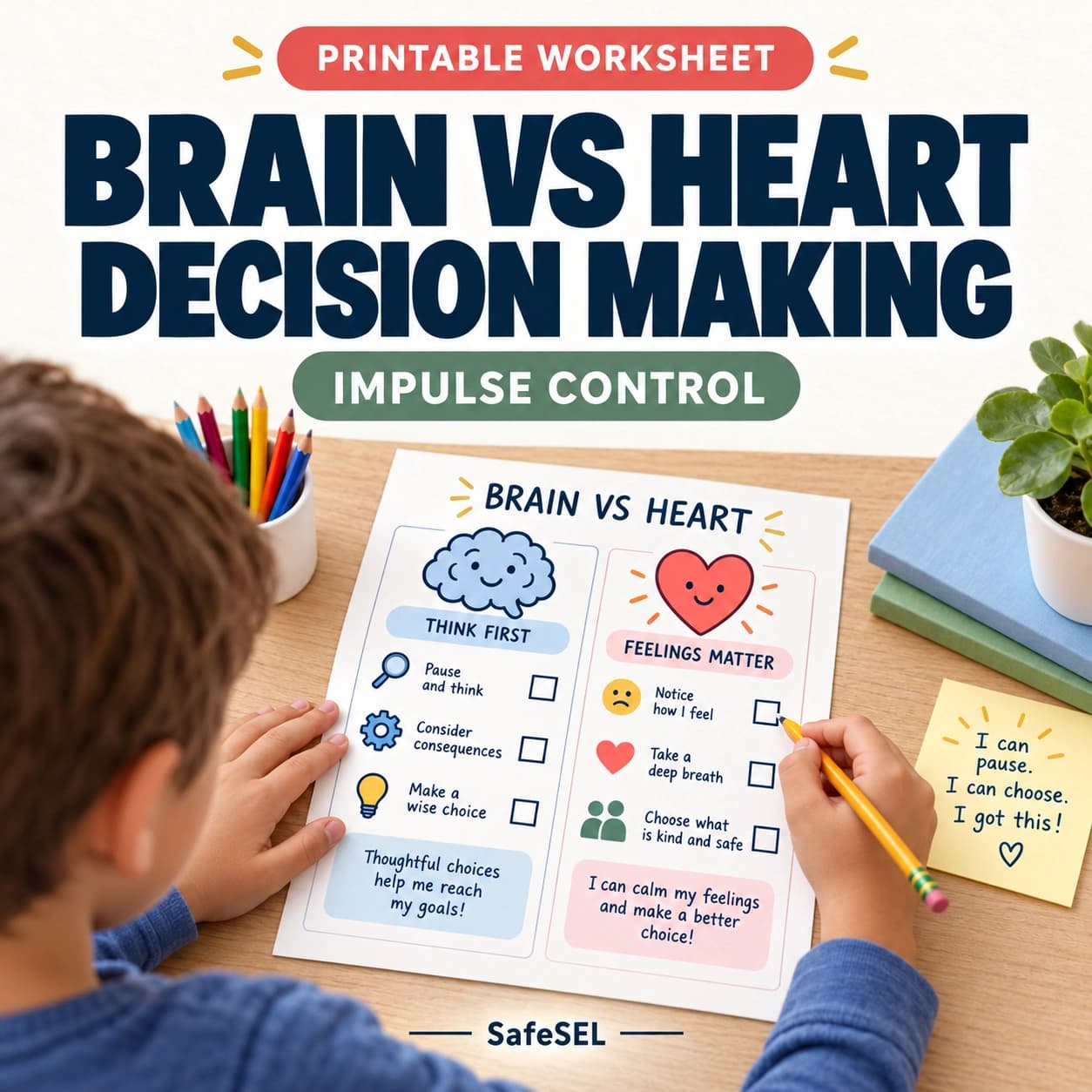
A printable decision-making and impulse control worksheet for children ages 7–12. Use it with an adult to reflect on choices before taking action.
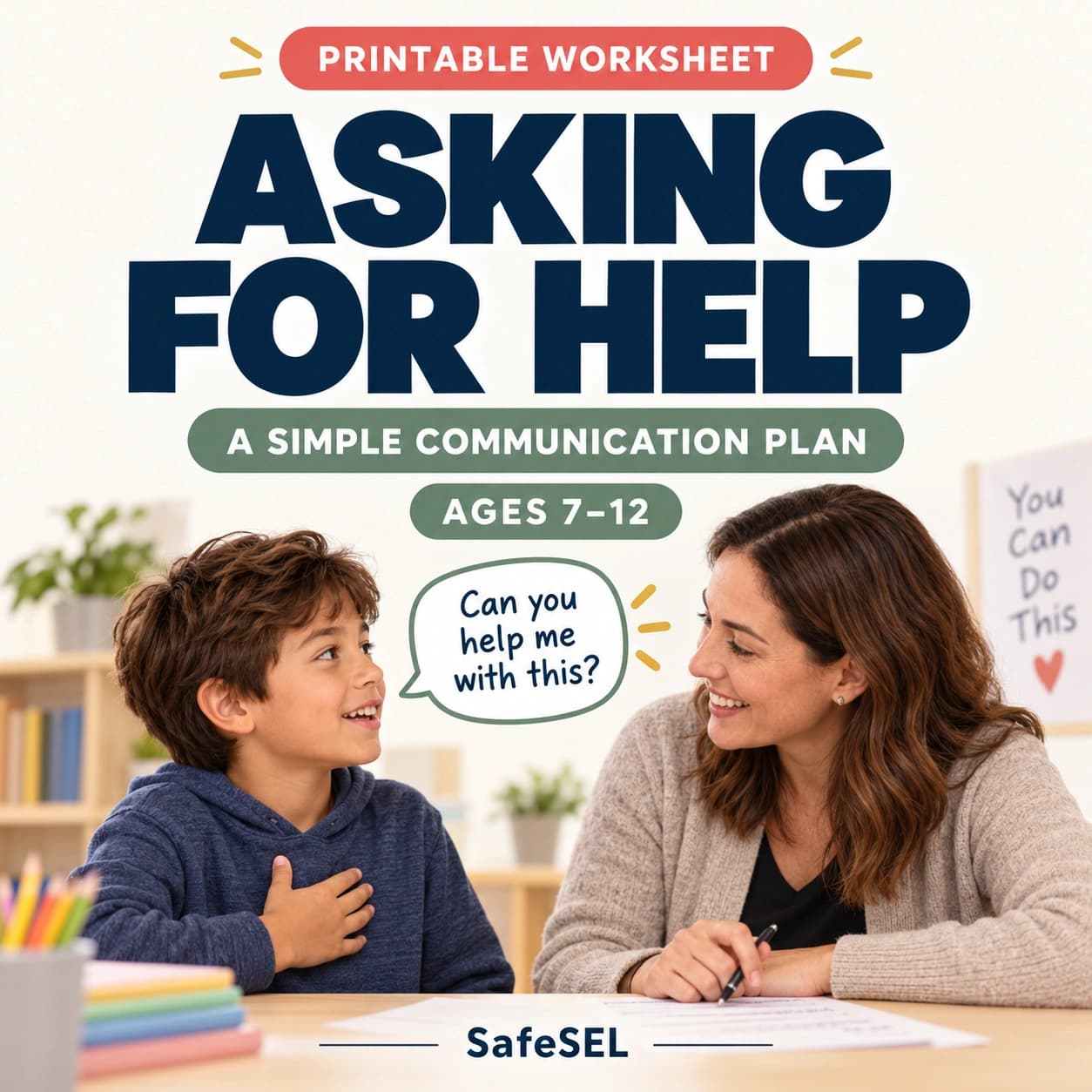
Use this asking for help worksheet with children ages 7–12 to identify when support is needed and rehearse clear words for asking a trusted adult. The single printable PNG works as a focused classroom, counseling or home activity with adult guidance.
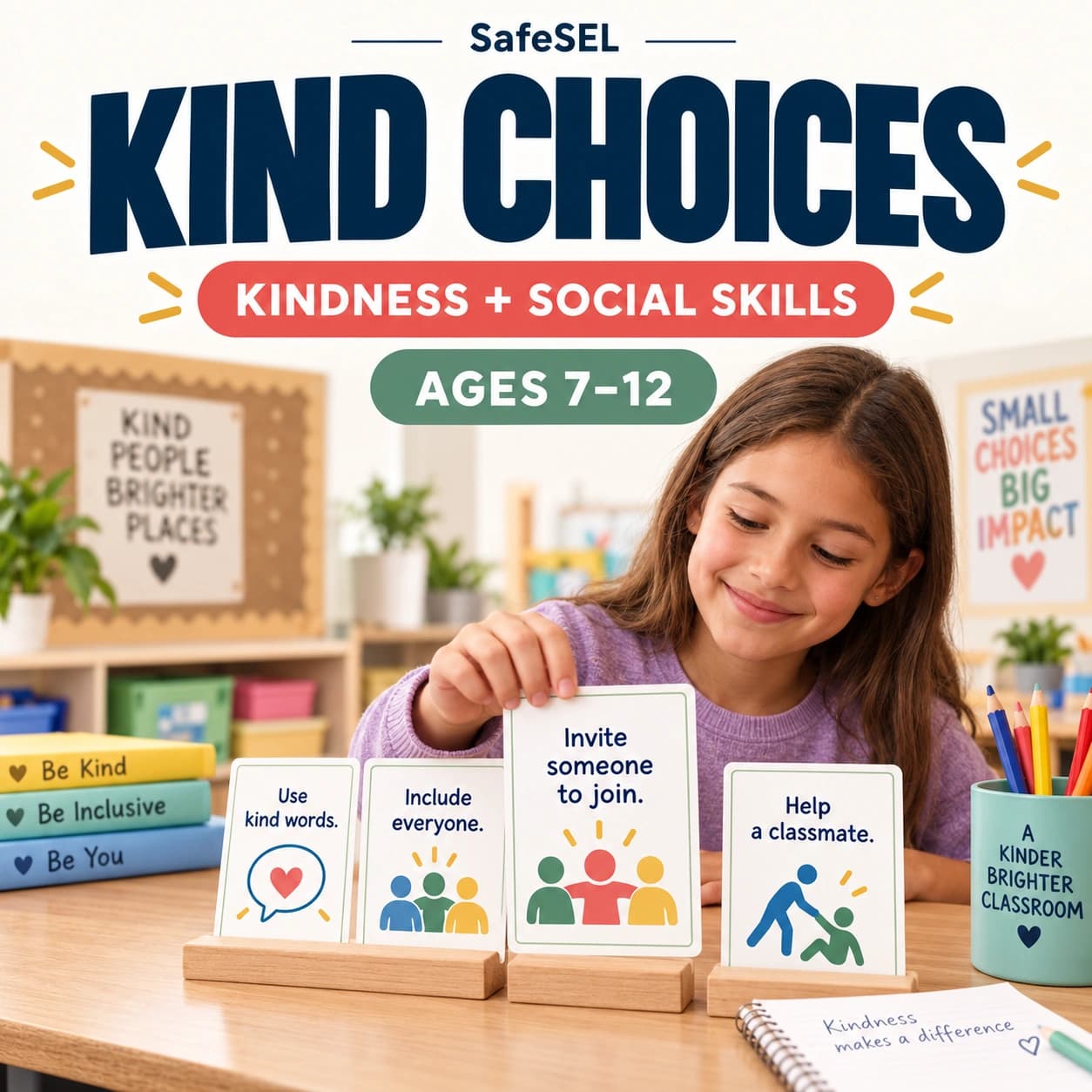
Use the Kind Choices worksheet to help children pause before acting, compare possible choices and plan a kinder next step. This single printable JPG supports a focused discussion in classroom SEL, counseling or guided practice at home.
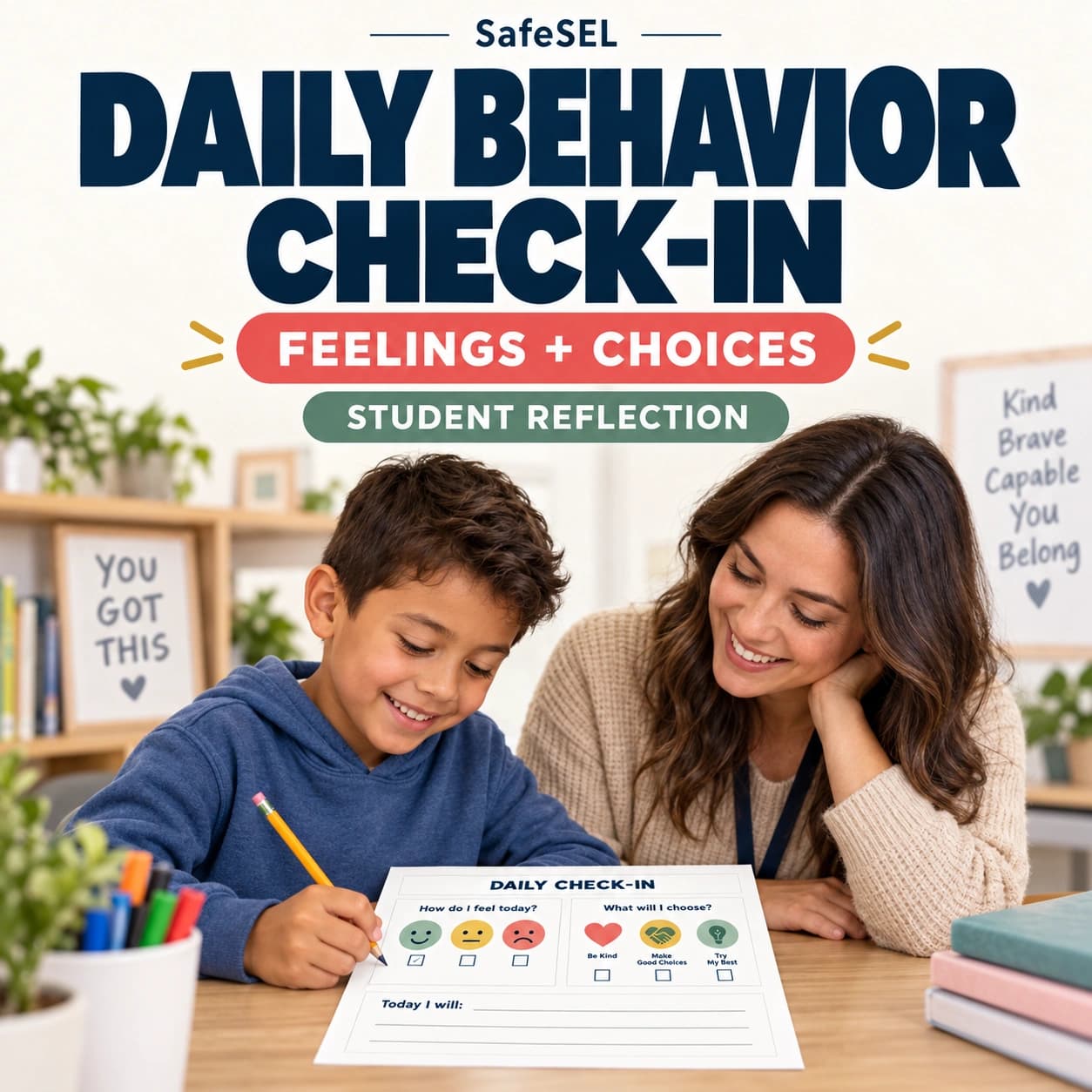
A print-ready worksheet for ages 7–12 with guided practice for daily check in and weekly goal tracker. Use it at home, school, counseling, or therapy.
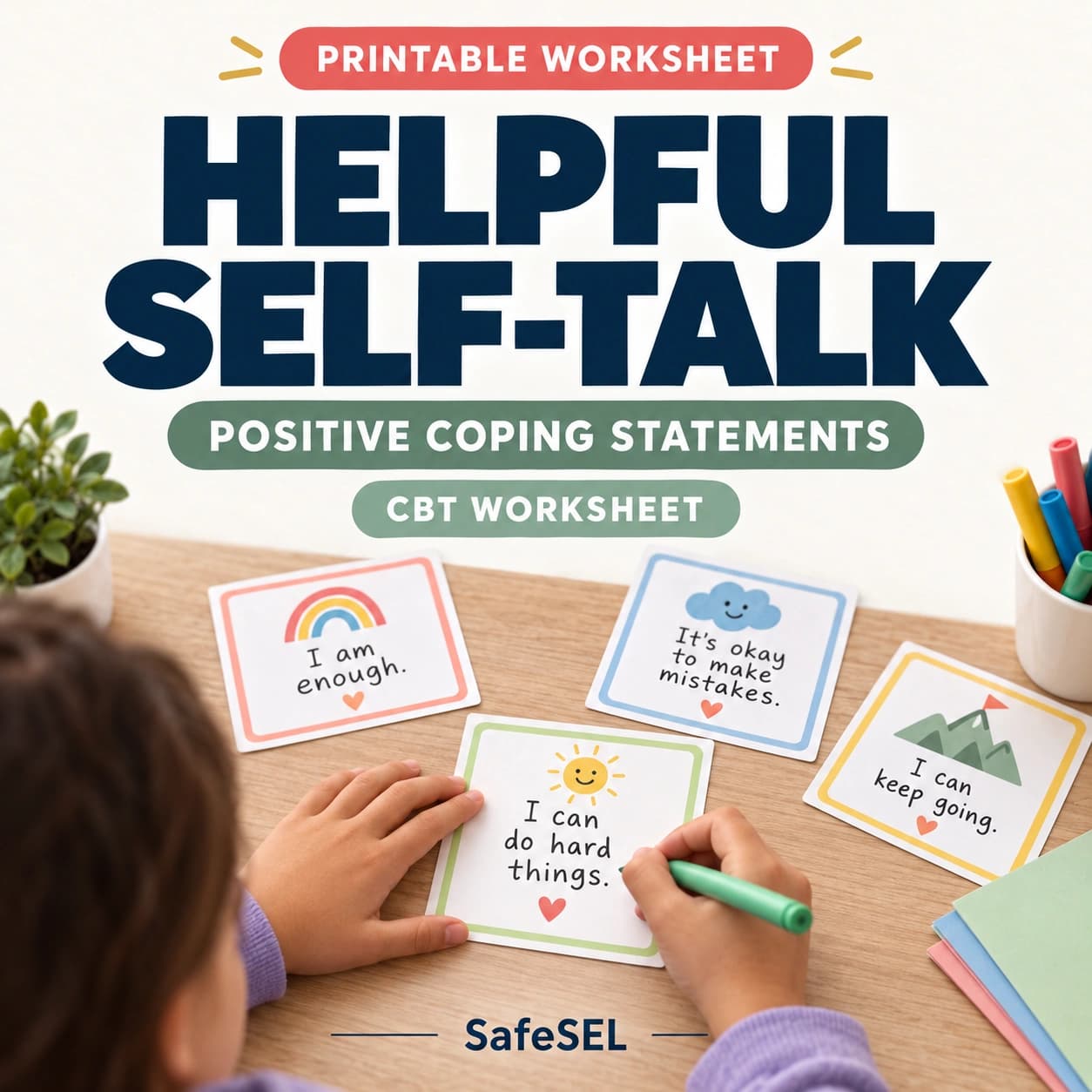
A focused printable CBT worksheet for ages 7–12 that helps children practise helpful self-talk through clear, guided reflection.
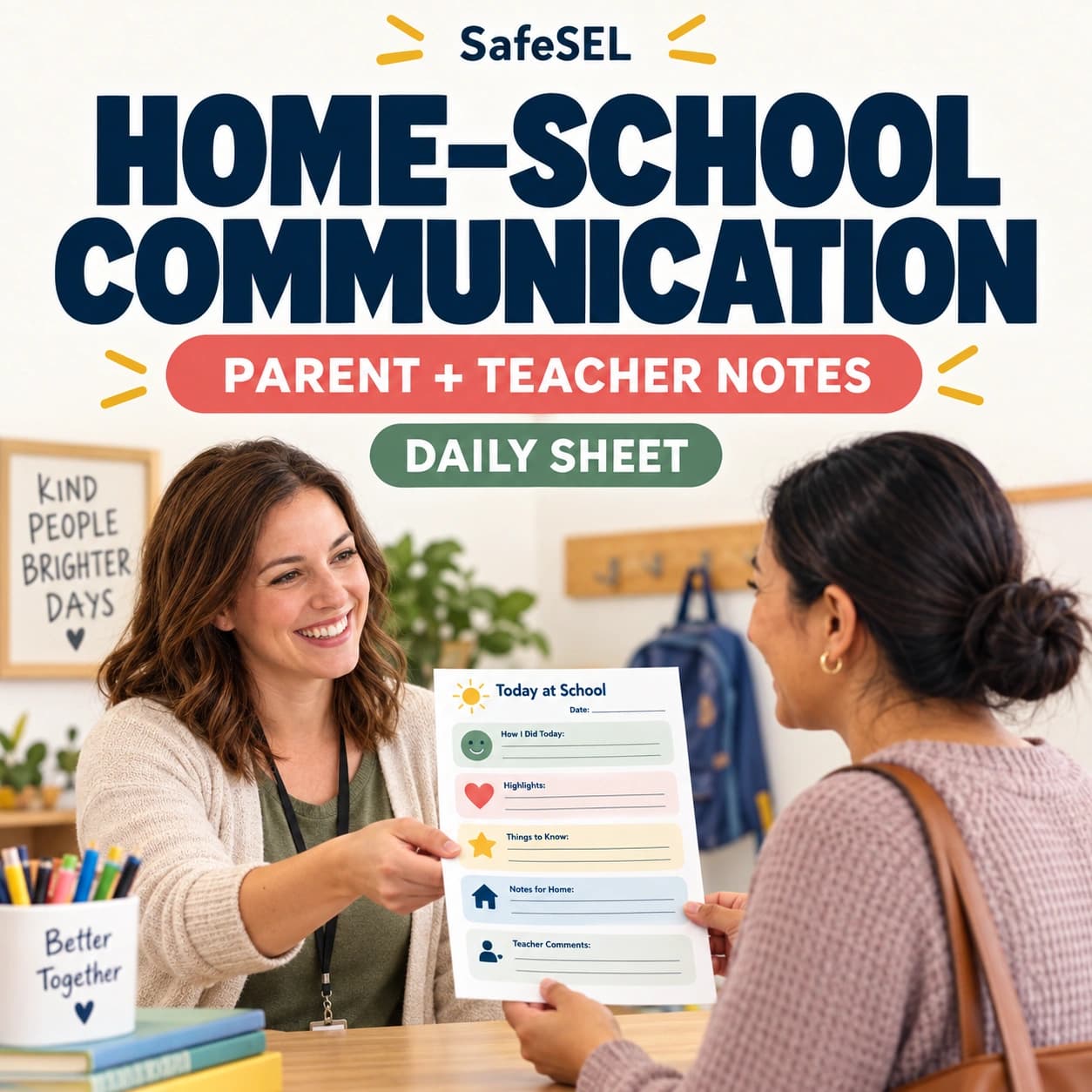
Home-School Communication Sheet for Ages 7-12 (Printable PNG): a print-ready worksheet for ages 7–12 with clear prompts for guided practice.
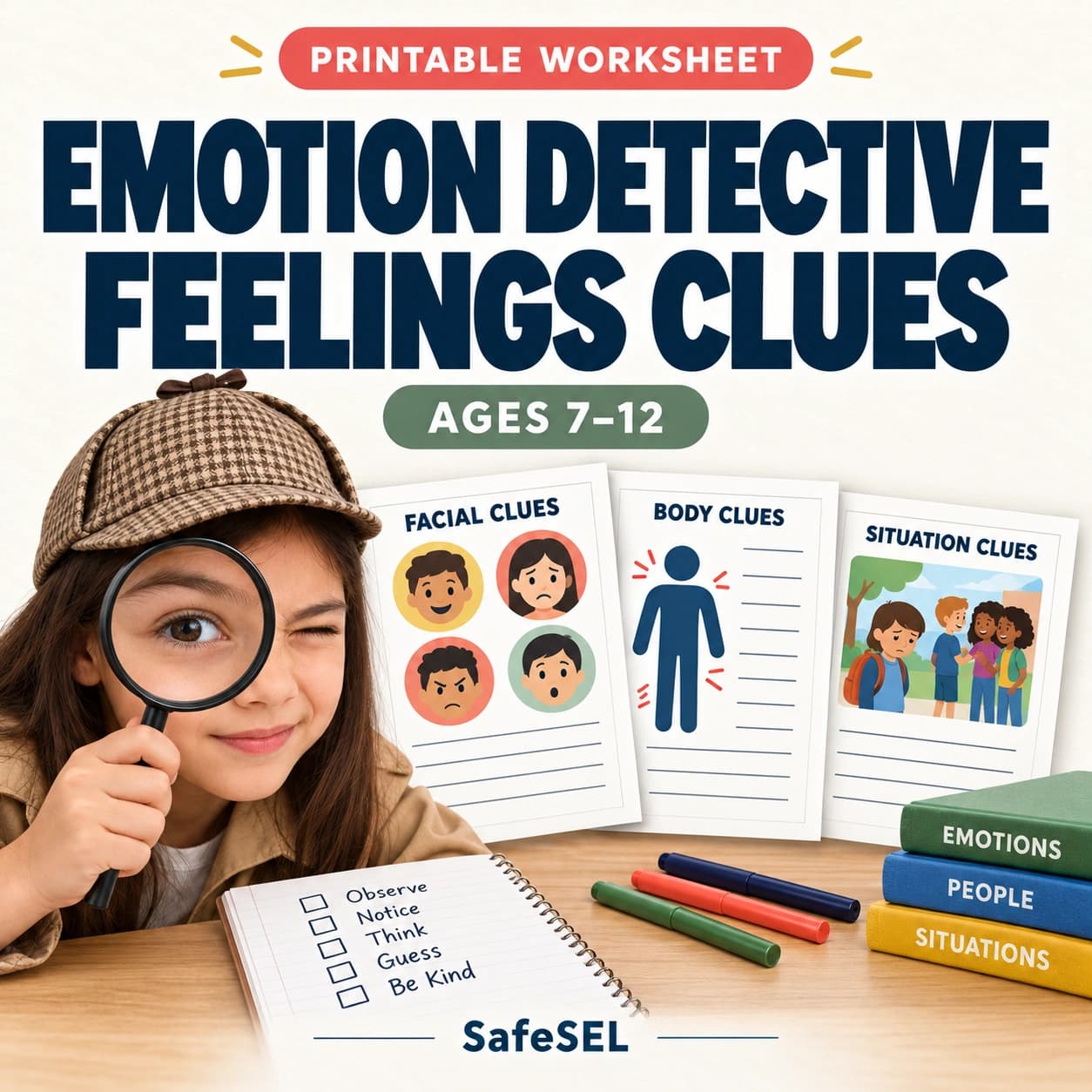
Emotion Detective Worksheet for Kids: a print-ready worksheet for ages 7–12 with clear prompts for guided practice.
Stop-and-think worksheets are easier to introduce through a calm, fictional example than during a live conflict. Self-management activities can ask what the character notices, which choices are available and what help is needed. A behavior reflection sheet has a different purpose: looking back and considering support for next time. Do not make a completed sheet the price of rejoining an activity.
A reflection asks what happened and what might help next time. Keep it brief, offer support with reading or writing, and avoid making a completed form the price of rejoining an activity. If you need to explore feelings or coping options, choose the relevant worksheet rather than forcing every question onto a behaviour think sheet.
Decision-making worksheets can give children a structured way to compare options in a fictional situation. Make the task concrete: what happened, what choices are available and what might follow? Use supported discussion where writing would obscure the child’s ideas. The page is a practice tool, not evidence that every impulsive response is deliberate or that a child can apply the skill without support in a harder moment.
Use these resources to teach the skill before a difficult moment, then return to the same language during reflection and repair. Activities break self-control into observable steps such as noticing body cues, naming the impulse, creating a short pause and selecting a response. Adults can model the process and adjust writing demands for counseling, classroom, small-group or guided home practice.
Most resources in this collection are designed for elementary-age children. Check the individual product page for the exact age range and level of adult support.
Usually no. Teach and practise the steps when the child is regulated. During intense distress, prioritise safety, co-regulation and the support plan already in place.
Yes. An adult can read the prompts aloud and let the child point, draw, role-play or dictate an answer so the activity measures the skill rather than handwriting.
Filter by resource type and age group to find the most useful printable.