Article archive: page 13
More practical, evidence-informed guidance for the real emotional and social situations children face.
How to Adapt One CBT Worksheet Across Ages 6–12
Adapt CBT worksheets through examples, communication options and reduced writing demands. Match the response format to the child, not just their age.
How to Praise Effort Without Creating More Performance Pressure
Give specific feedback on strategy and help-seeking without demanding endless effort. Support learning while allowing breaks, adjustments and mistakes.
CBT Skills for Ages 10–12: Autonomy, Nuance, and Realistic Thinking
Explore CBT skills with children ages 10–12 using believable examples, realistic self-talk and room for disagreement, uncertainty and practical action.
How to Handle Different Rules Between Parents and Grandparents
Plan clear handovers between parents and grandparents. Separate health and safety requirements from preferences without asking children to take sides.
CBT Skills for Ages 7–9: Concrete Evidence and Small Experiments
A practical, evidence-informed guide to CBT skills for ages 7–9, with concrete examples, accessible next steps, and clear limits on what the guidance can establish.
After-School Emotional Release: How to Support a Child Without Assuming a Diagnosis
Help a child who struggles after school by checking basic needs, reducing immediate demands and planning support without assuming a diagnosis.
CBT Ideas for Ages 4–6: Stories, Play, and Simple Predictions
A practical, evidence-informed guide to CBT ideas for ages 4–6, with concrete examples, accessible next steps, and clear limits on what the guidance can establish.

When a Child Repeatedly Loses School Materials
Trace where school materials disappear and build a usable bag-check routine. Match folders, storage and visual prompts to the actual handover.
Between-Session Practice in Child Therapy: A Guide for Parents and Therapists
Plan manageable therapy homework with the child, caregiver and therapist. Clarify the purpose, practise an example and review barriers without blame.
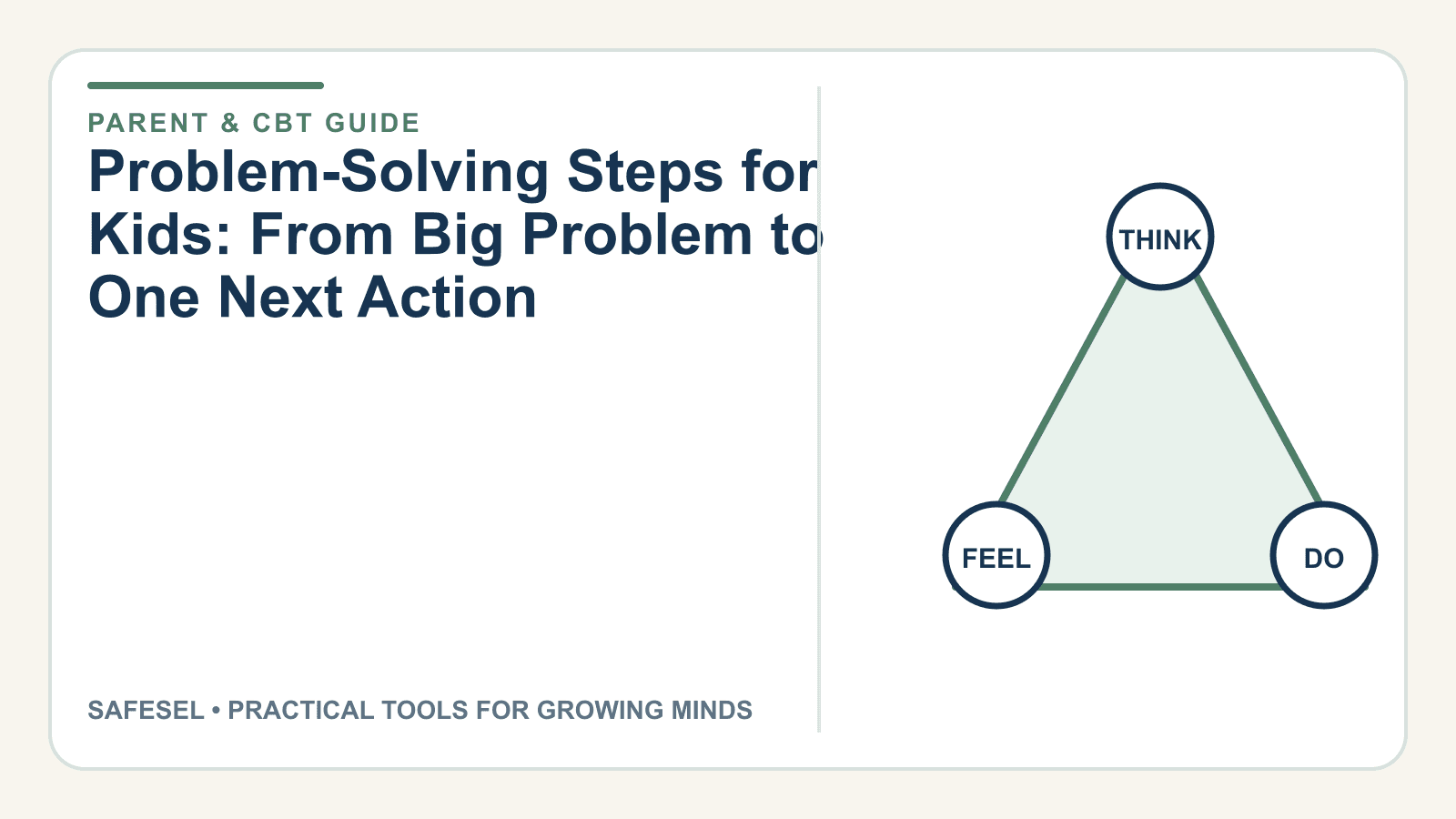
When a Child Knows What to Do but Cannot Start the Task
Support task initiation by identifying the first action and barriers to beginning. Use practical prompts and review what changes with appropriate help.
Family Emotional Regulation: A Shared Plan for Different Ways of Calming
A practical, evidence-informed guide to family emotional regulation, with concrete examples, accessible next steps, and clear limits on what the guidance can establish.
When Switching Tasks Causes Distress or Refusal
Practical guidance for responding when switching tasks causes distress or refusal, with a clear first step, realistic adult language, and functional measures of progress.