Worksheets
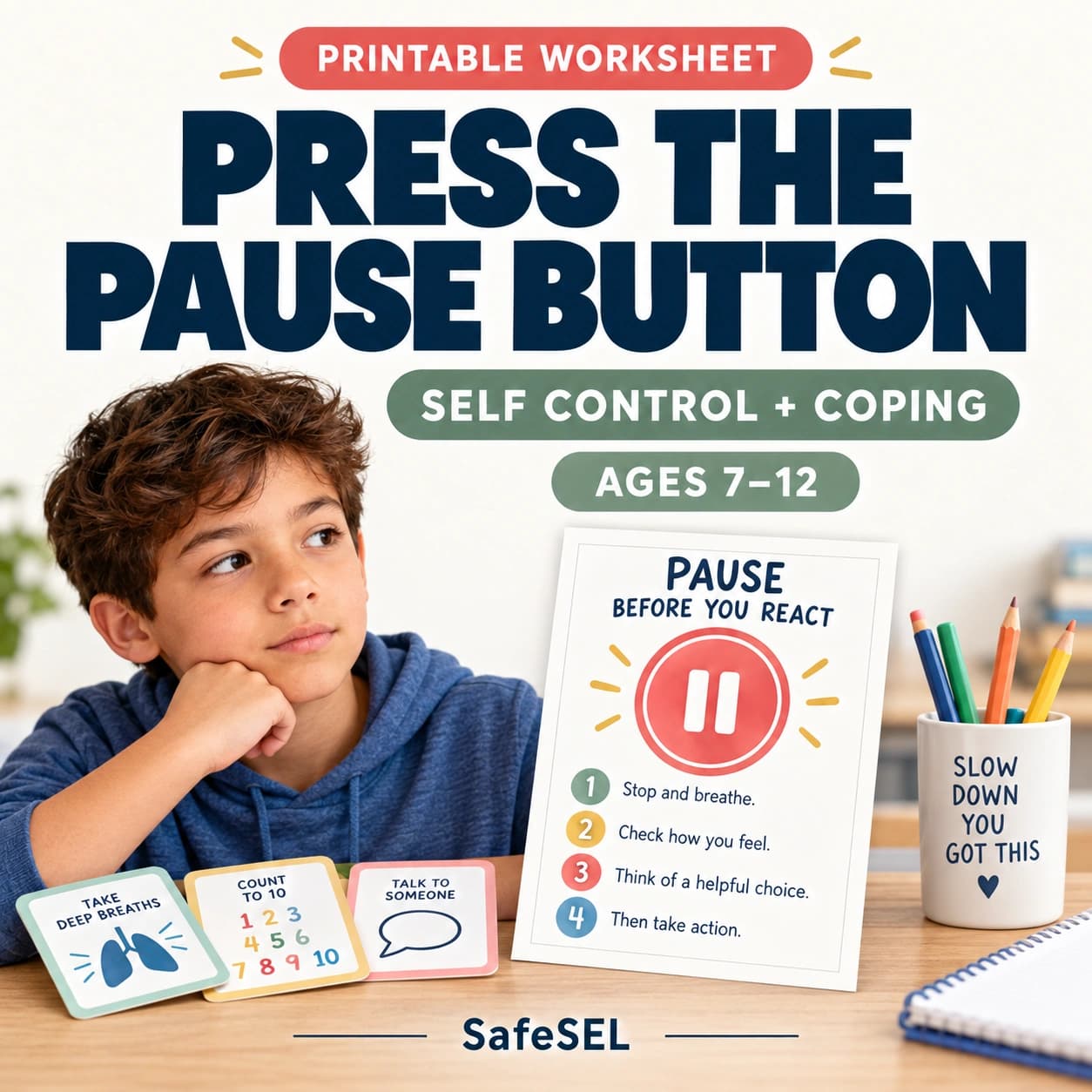
Self Control Worksheet for Kids
Ages 7–12PNG
Self Control Worksheet for Kids: a print-ready worksheet for ages 7–12 with clear prompts for guided practice.
Find printable SEL worksheets for elementary students covering emotional awareness, coping, self-regulation, friendship and social skills.
Self Control Worksheet for Kids: a print-ready worksheet for ages 7–12 with clear prompts for guided practice.
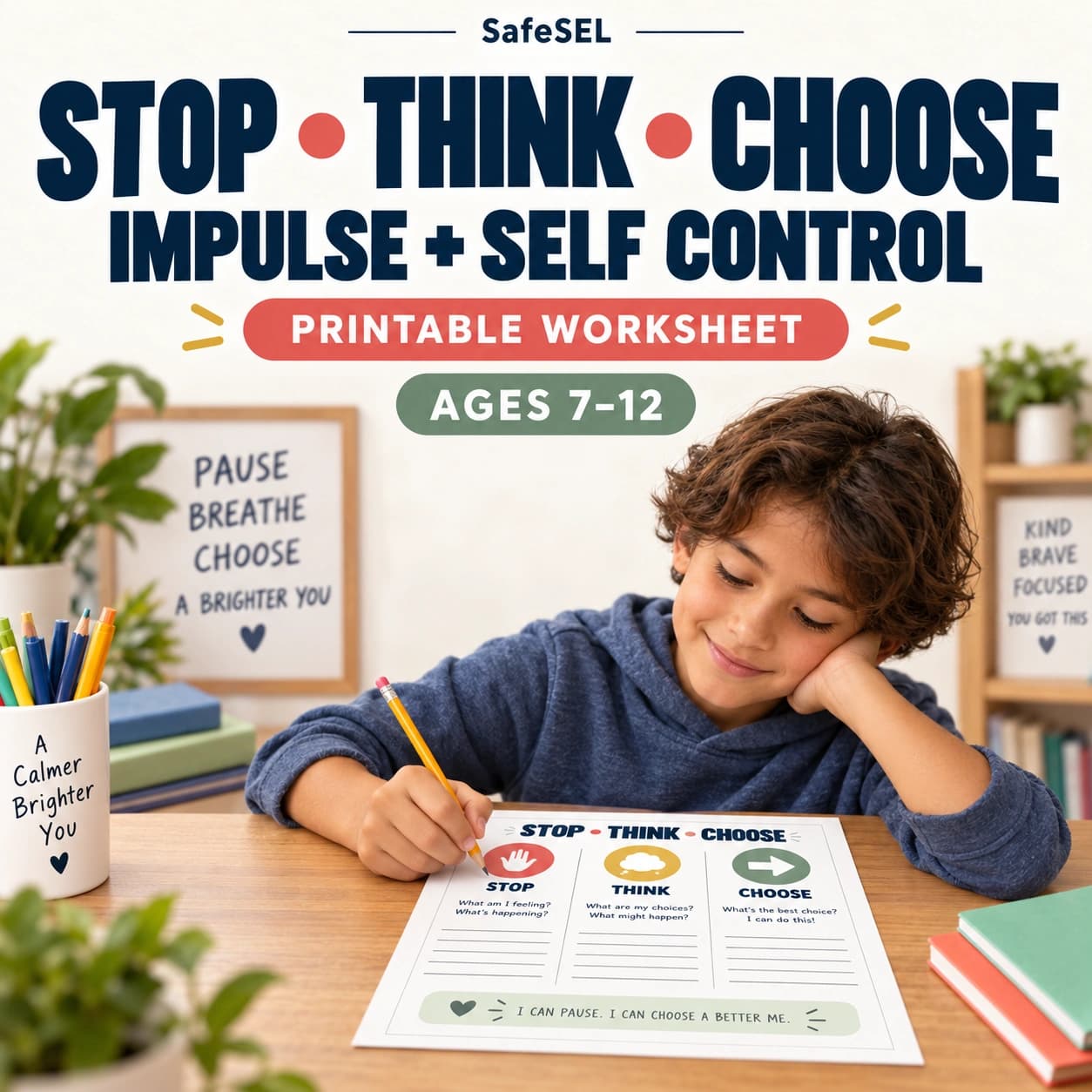
Stop Think Choose Worksheet: a print-ready worksheet for ages 7–12 with clear prompts for guided practice.
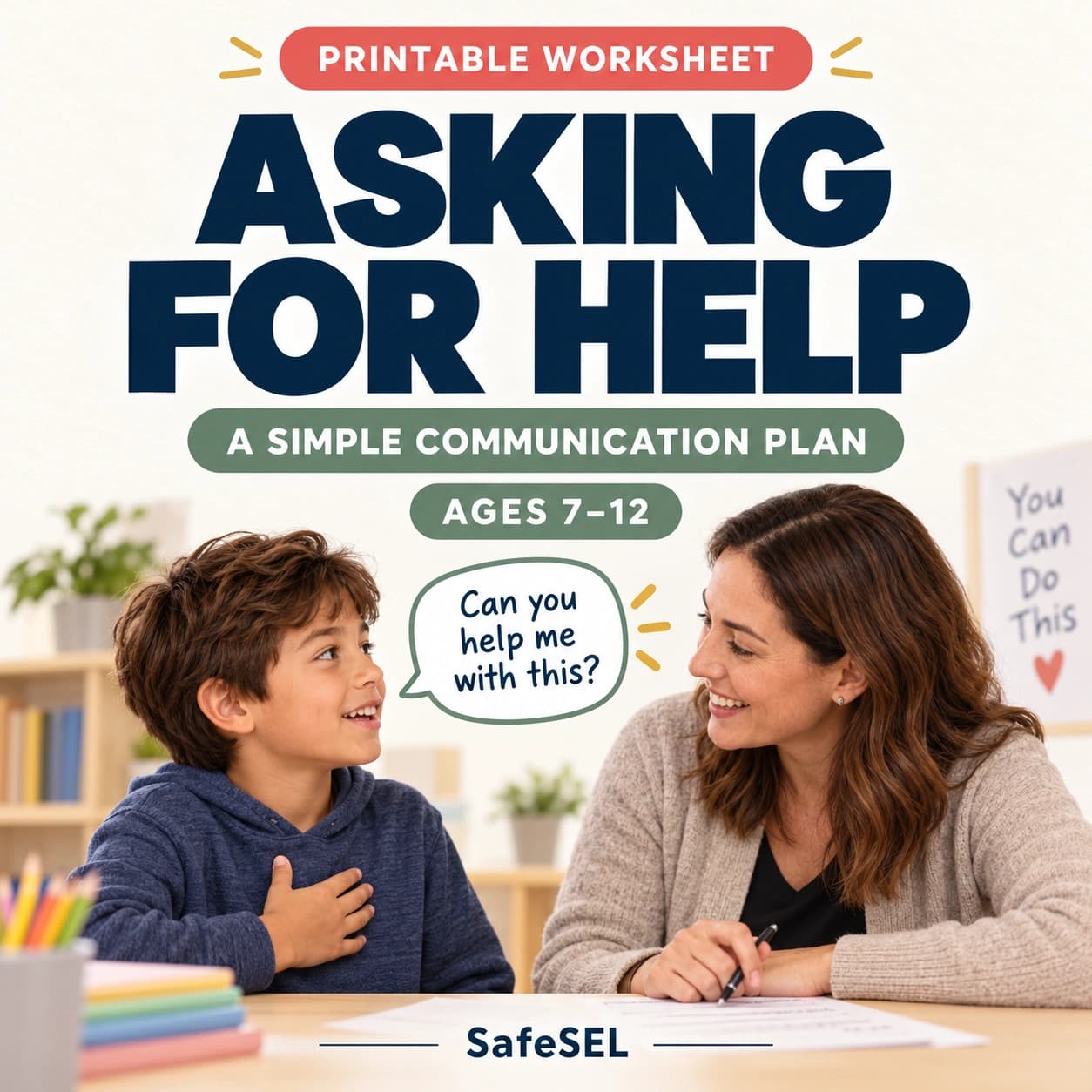
Use this asking for help worksheet with children ages 7–12 to identify when support is needed and rehearse clear words for asking a trusted adult. The single printable PNG works as a focused classroom, counseling or home activity with adult guidance.
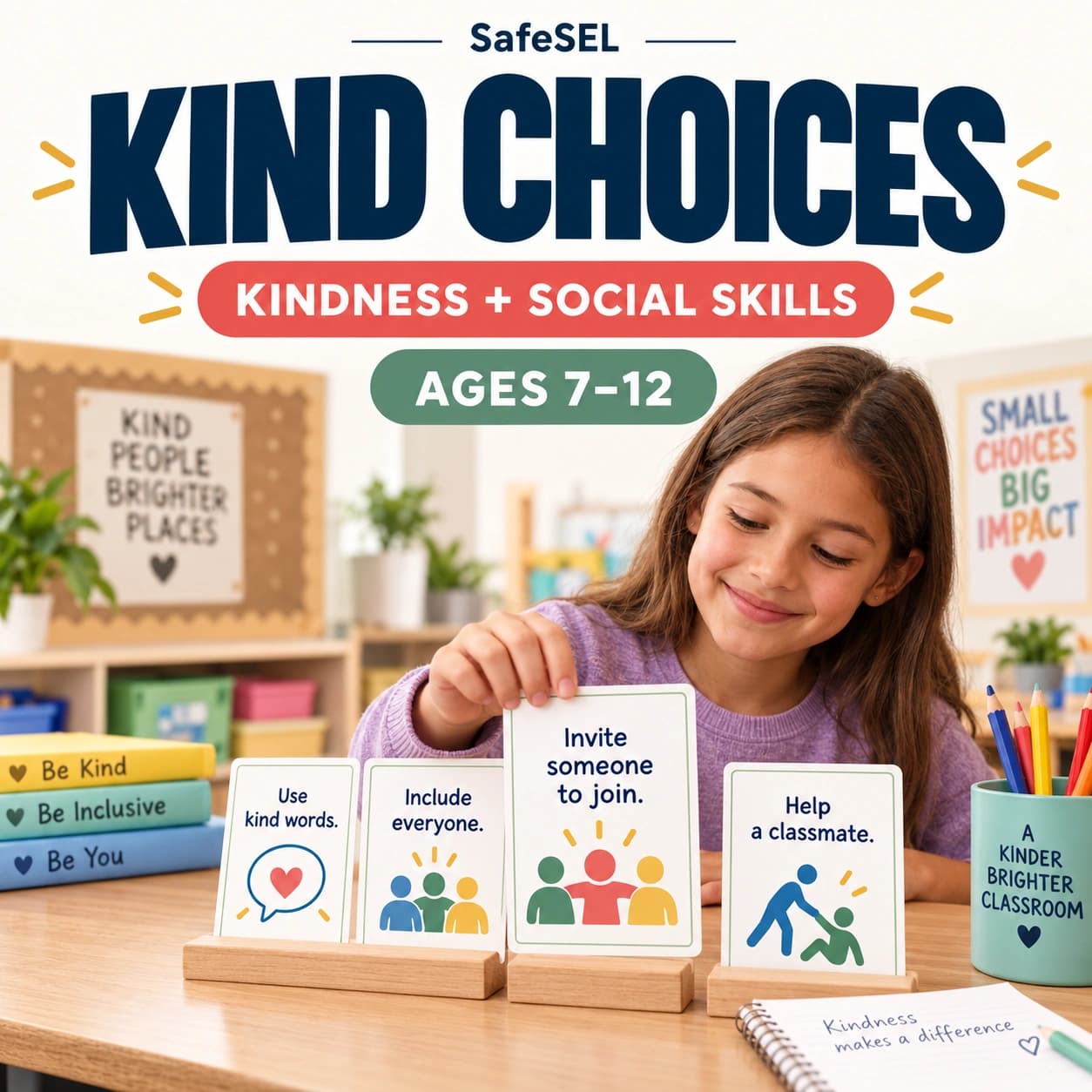
Use the Kind Choices worksheet to help children pause before acting, compare possible choices and plan a kinder next step. This single printable JPG supports a focused discussion in classroom SEL, counseling or guided practice at home.
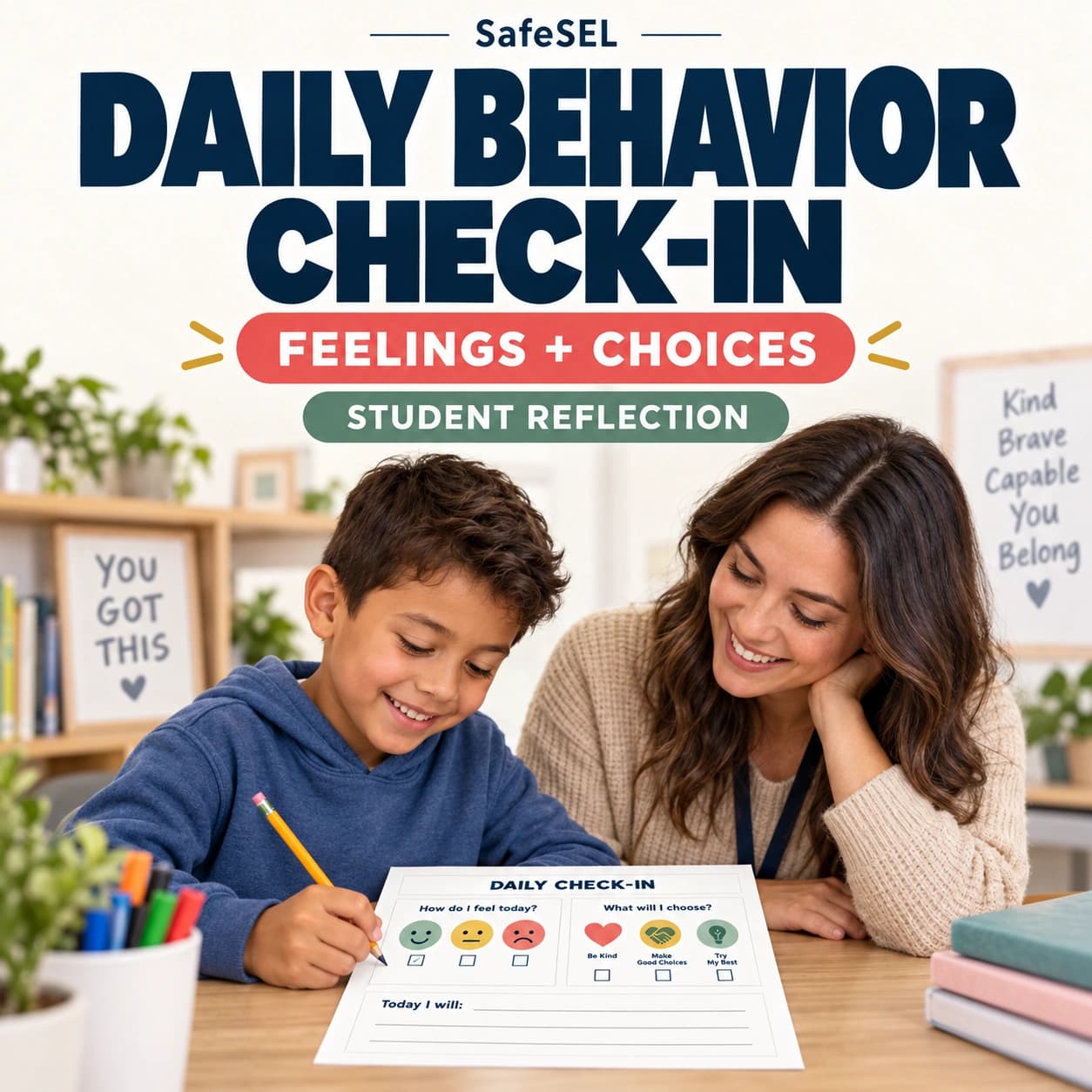
A print-ready worksheet for ages 7–12 with guided practice for daily check in and weekly goal tracker. Use it at home, school, counseling, or therapy.
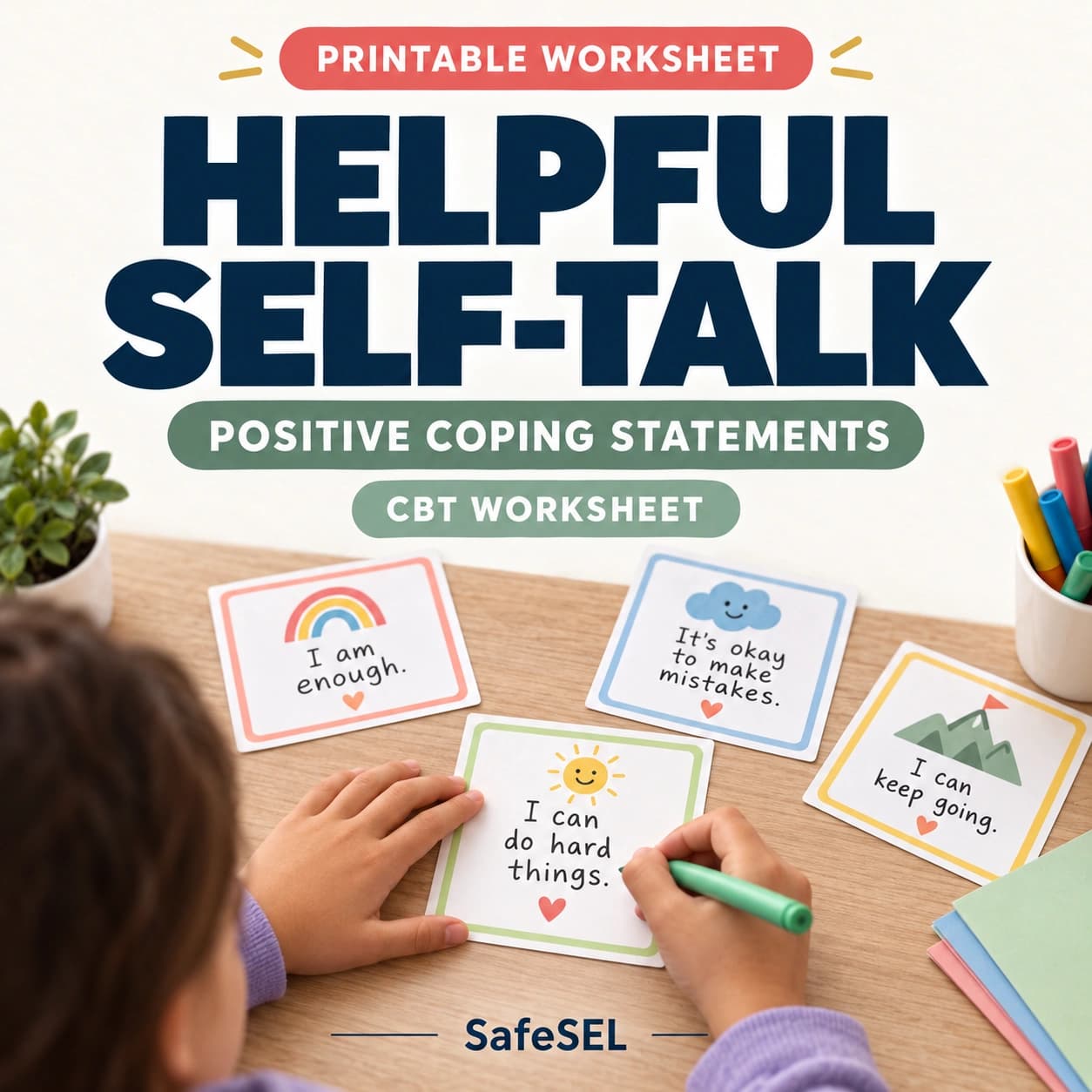
A focused printable CBT worksheet for ages 7–12 that helps children practise helpful self-talk through clear, guided reflection.
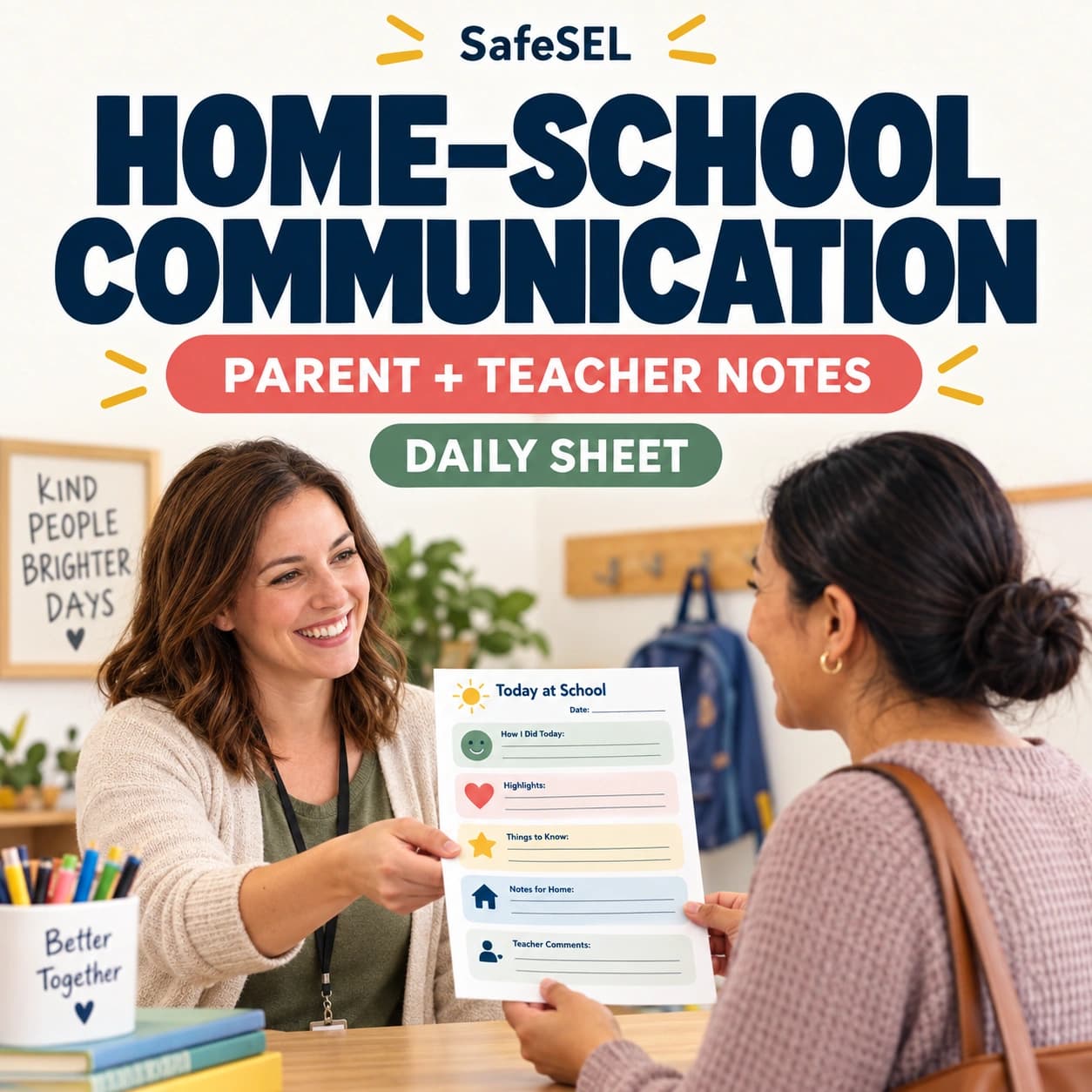
Home-School Communication Sheet for Ages 7-12 (Printable PNG): a print-ready worksheet for ages 7–12 with clear prompts for guided practice.
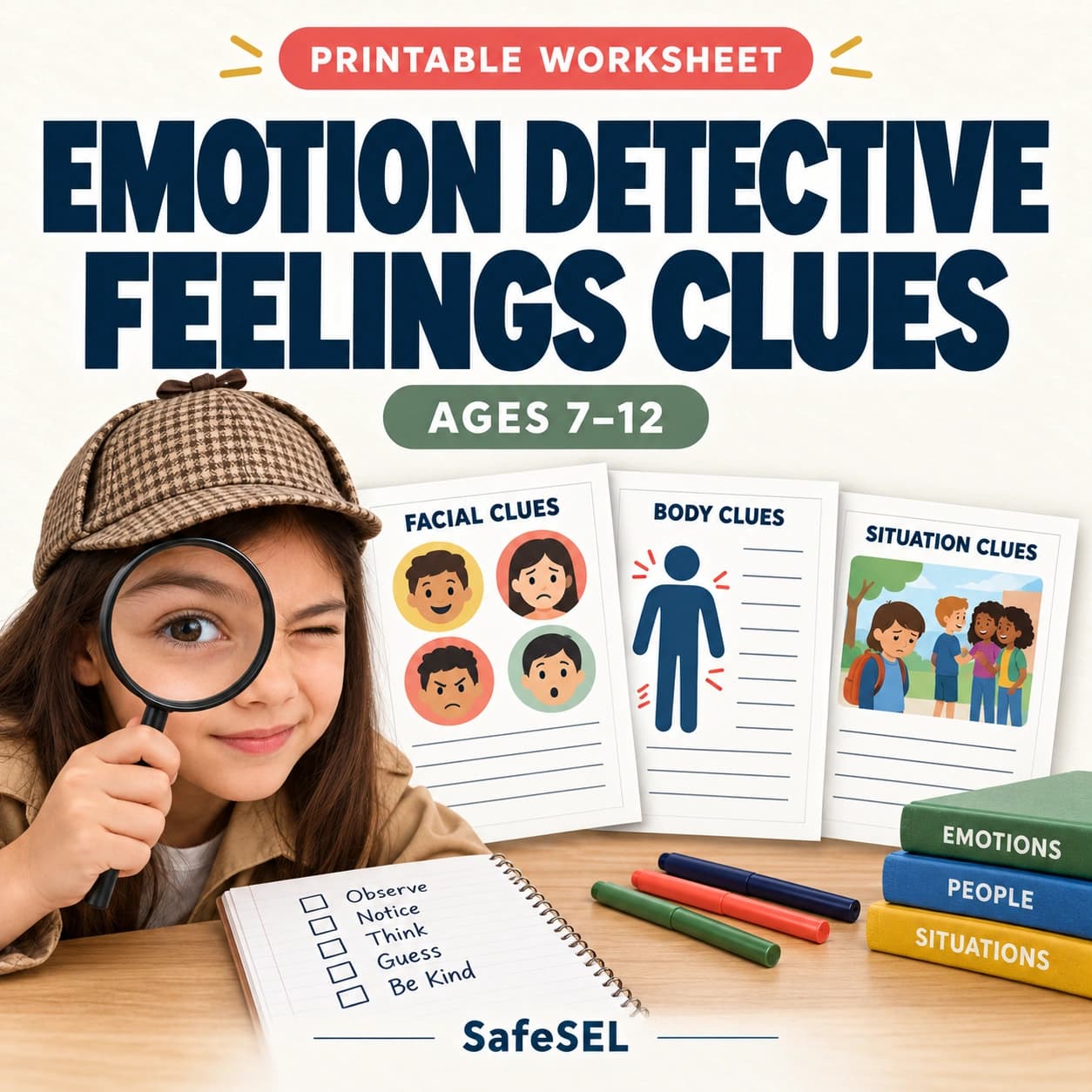
Emotion Detective Worksheet for Kids: a print-ready worksheet for ages 7–12 with clear prompts for guided practice.
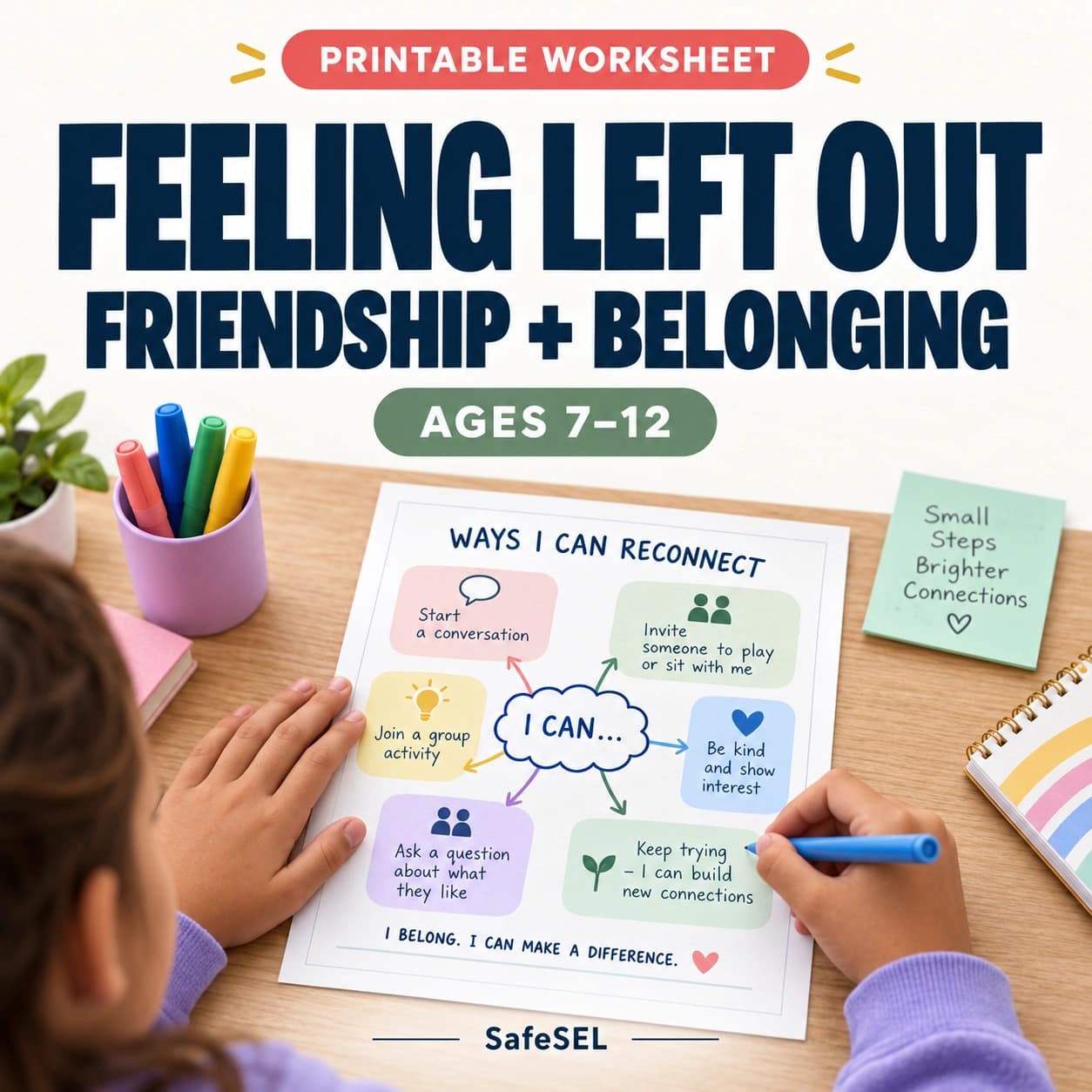
Support children working on feeling left out and coping skills with a printable SEL worksheet for ages 7–12 designed for guided reflection and practice.
Help students notice an unhelpful thought and build a balanced response they can actually believe.
Open the free resource →Turn a broad worry into a concrete distinction between control, influence and what cannot be changed.
Open the free resource →Practice when to ask for help, who can help and the exact words a student can use.
Open the free resource →Social emotional learning worksheets work best when their task is clear. An emotional check-in worksheet asks about the present, while a reflection looks back at an event. Choose a feelings check-in worksheet when you want a brief response rather than a detailed personal account. A student can draw, point or use supported conversation instead of writing a long answer. Avoid using the check-in as a public behaviour score.
For a friendship discussion, select a peer situation rather than a general feelings sheet. For a coping conversation, leave room to compare choices. Introduce a fictional example before inviting a personal one, then decide when the learner will revisit the skill. These SEL worksheets are focused social-emotional resources, not a collection of reading, maths or general homework sheets.
Activity sheets serve different purposes. Reflection worksheets ask students to look back; a check-in captures how things feel now. Avoid using the two interchangeably. Before giving out a page, explain who will see the response and whether students can use a fictional example. Inspect the prompts and reading demands first, especially when a group includes children who prefer drawing or supported discussion to writing.
Use these sel worksheets resources to teach one clear skill at a time, practise it with realistic examples and return to it when the child is calm enough to learn.
The collection includes child-friendly resources for elementary ages. Check each product for its exact age range and suggested setting.
Yes. SafeSEL digital resources are designed so you can select the relevant pages for the current skill, child or group.
Filter by resource type and age group to find the most useful printable.