Article archive: page 2
More practical, evidence-informed guidance for the real emotional and social situations children face.
How to Plan and Facilitate a Parent Education Workshop
A practical parent workshop planning guide with a sample 90-minute agenda, accessibility checks, group boundaries, rehearsal and follow-up.
Are Coloring Books Good for Kids? What They Can—and Cannot—Support
A balanced look at what coloring may support for children ages 6–10, what research actually shows, and when another activity may be a better fit.
Can Coloring Help Kids Calm Down? What Research Says About Coloring and Emotional Regulation
Learn when coloring may help a child settle, what pediatric studies actually measured, and why a quiet activity is not the same as anxiety treatment.
Coloring and Fine Motor Skills: What Parents Should Know
Understand the hand and visual-motor demands of coloring, what studies can and cannot prove, and when everyday difficulties deserve professional advice.
Does Coloring Help Attention and Focus in Children?
Coloring can hold attention during one task, but evidence for broader focus is limited. Learn how to use it without making unsupported ADHD claims.
Story-Based Coloring Books vs. Regular Coloring Pages: Is There a Difference?
Compare story-based and stand-alone coloring pages for ages 6–10, including engagement, conversation, cognitive load, and the limits of current evidence.
Should Children Stay Inside the Lines? What Coloring Really Tells Us About Development
Learn what line accuracy may reflect, why one coloring page cannot assess development, and how parents can support control without correcting creativity.
My Child Does Not Like Coloring—Should I Be Concerned?
Most children do not need to enjoy coloring. Learn how to separate preference from discomfort, motor barriers, perfectionism, and wider participation concerns.
How to Use Coloring to Talk With a Child About Feelings Without Turning It Into a Lesson
Use coloring as a low-pressure setting for connection, with optional questions, careful listening, and no attempts to decode a child’s color choices.
How to Choose a Coloring Book for a 6–10-Year-Old: A Parent Guide
Choose coloring books by interest, page complexity, motor comfort, reading load, representation, and purpose—not broad developmental claims on the cover.
Coloring as a Screen-Free Quiet Activity: When It Helps and When Not to Force It
Coloring can be one screen-free option, but it should not replace movement, sleep, connection, or a child’s right to choose another quiet activity.
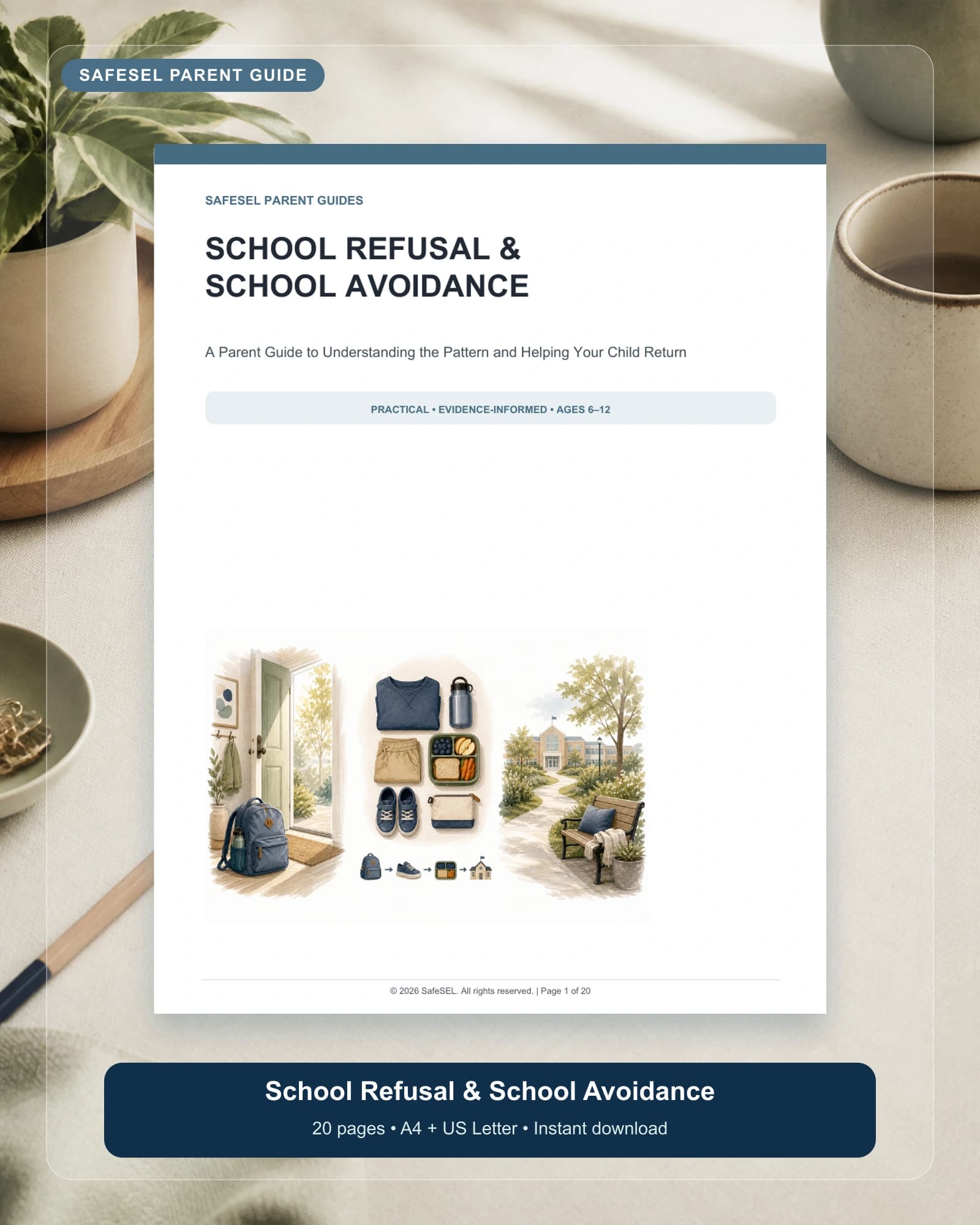
When a Child Refuses School: What Parents Should Check Before Pushing Harder
A practical guide to school refusal: check safety, learning, health, anxiety and the exact point of breakdown before building a return plan.