Article archive: page 4
More practical, evidence-informed guidance for the real emotional and social situations children face.
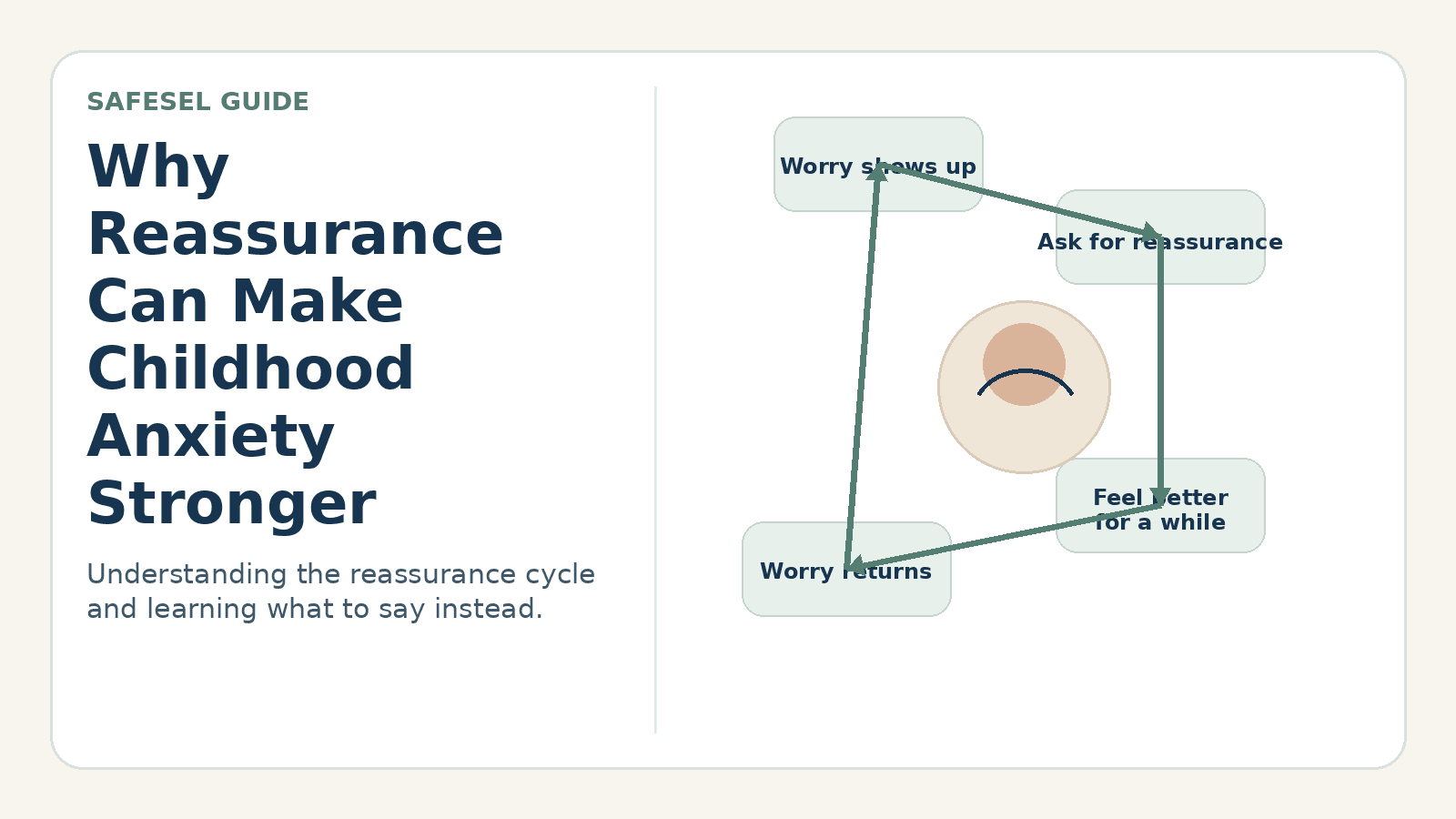
Why Reassurance Can Make Childhood Anxiety Stronger
Repeated reassurance can calm a worried child briefly, but it may also teach the child to rely on certainty from an adult. Here is how to respond without dismissing the fear.
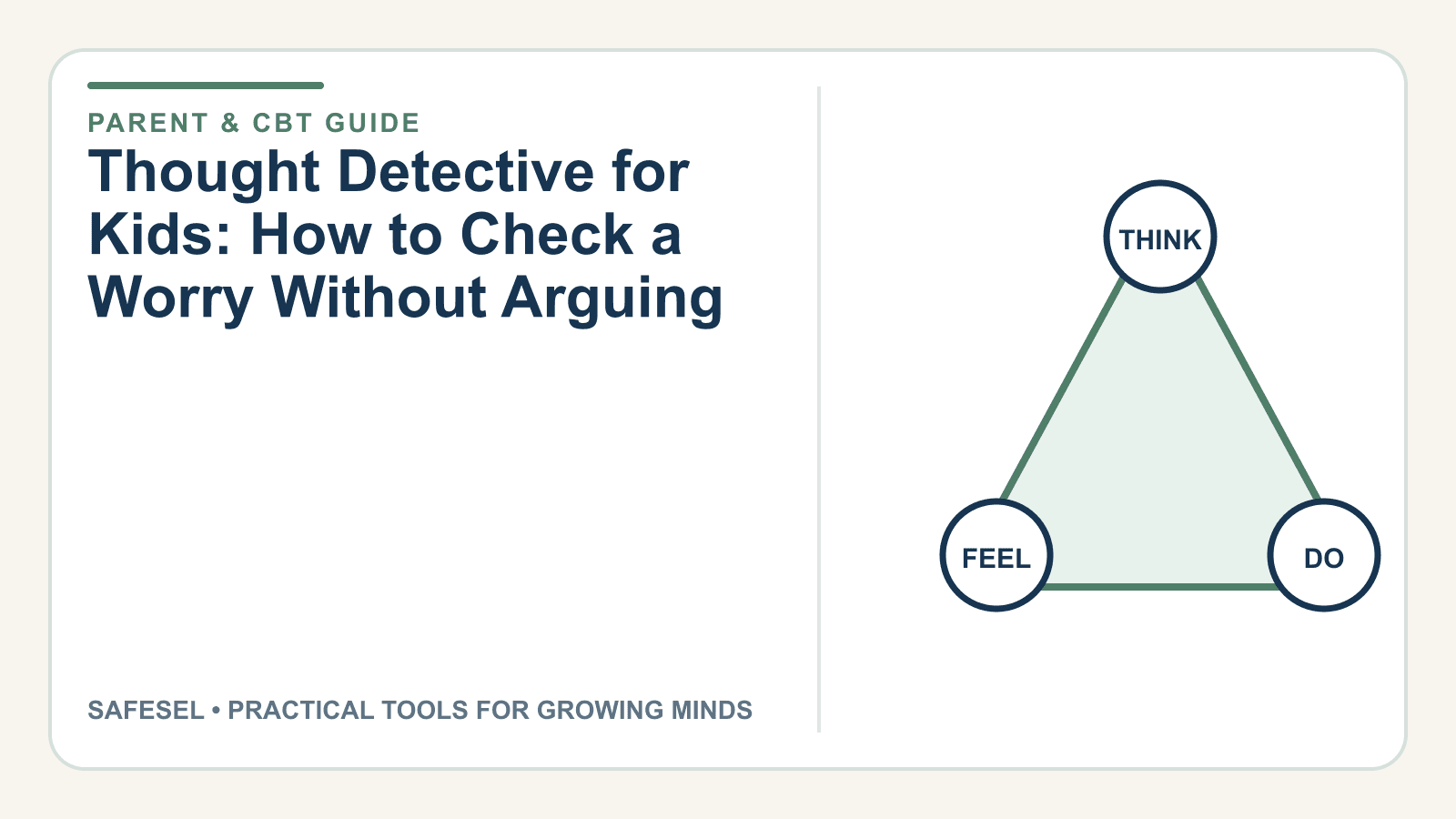
How to Help a Child Check an Anxious Thought
A practical guide to helping a child check an anxious thought, with realistic steps, language adults can use, and ways to judge whether the plan is helping.
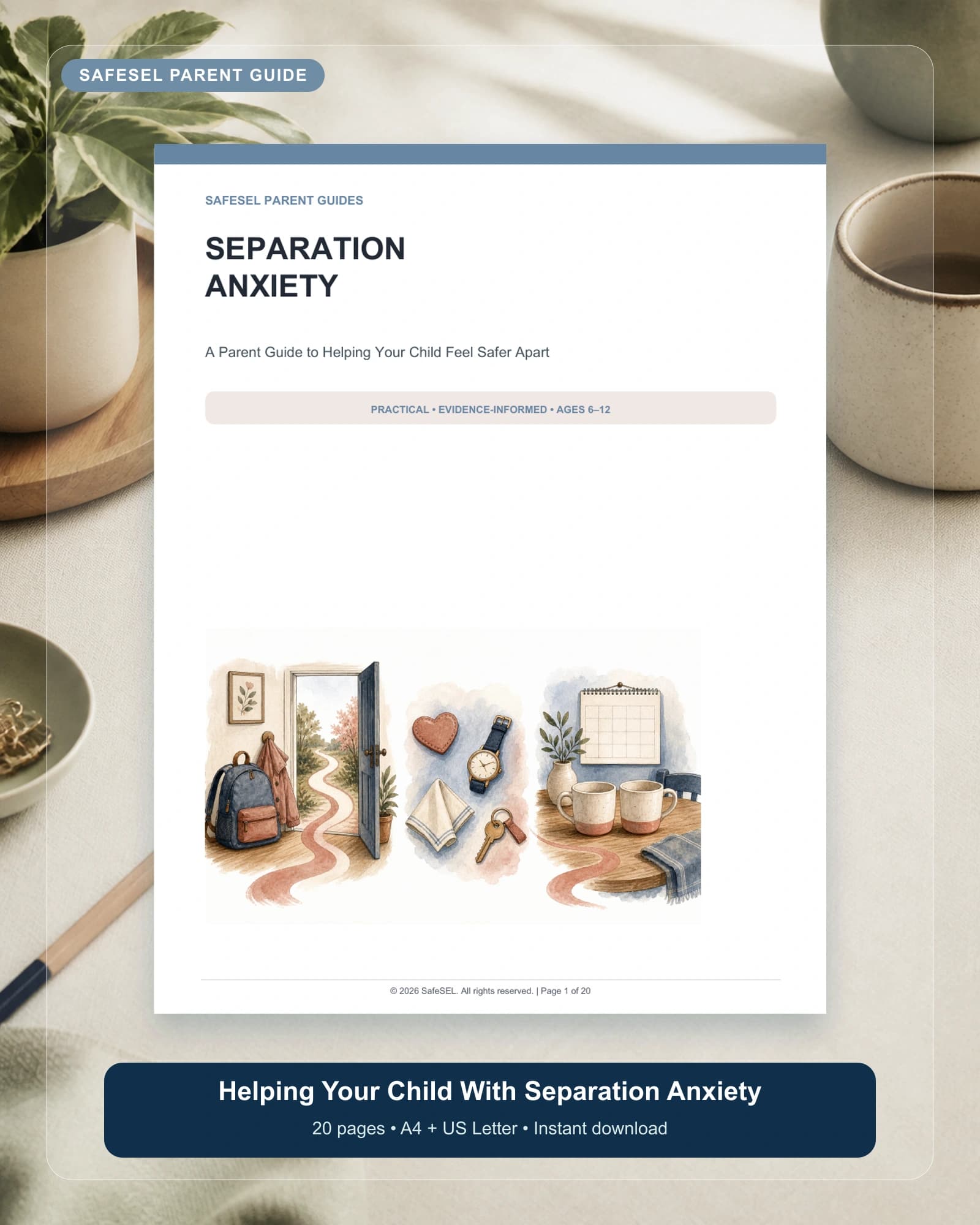
Separation Anxiety in Children: Goodbyes, Practice and Reassurance That Helps
Help a child feel safer apart with a short goodbye, manageable practice and reassurance that supports confidence without promising certainty.
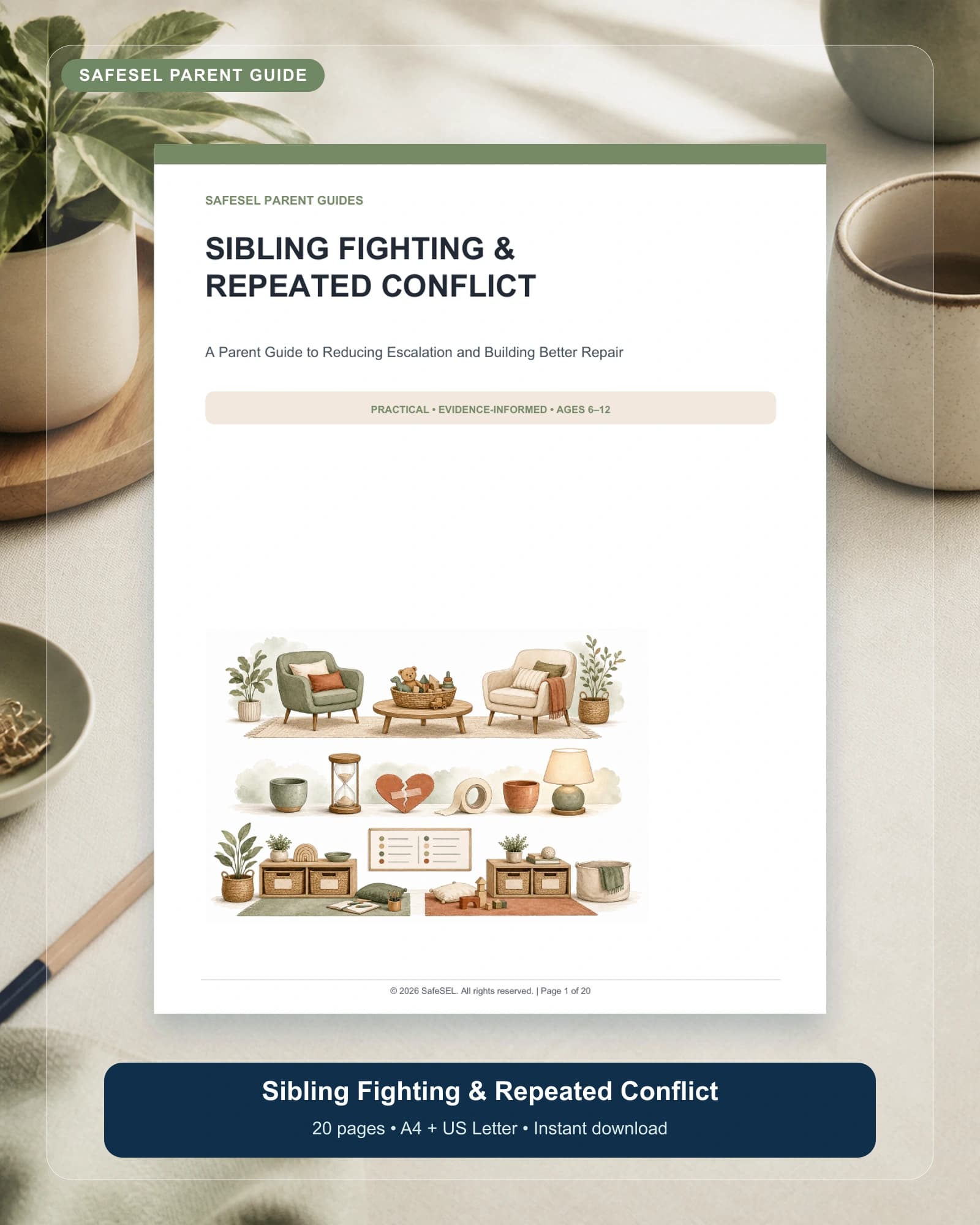
Repair After Sibling Fights: What to Do Without Forced Apologies
A safety-first sequence for sibling fights: separate, regulate, hear each child, repair concrete harm and change the condition that restarts the conflict.
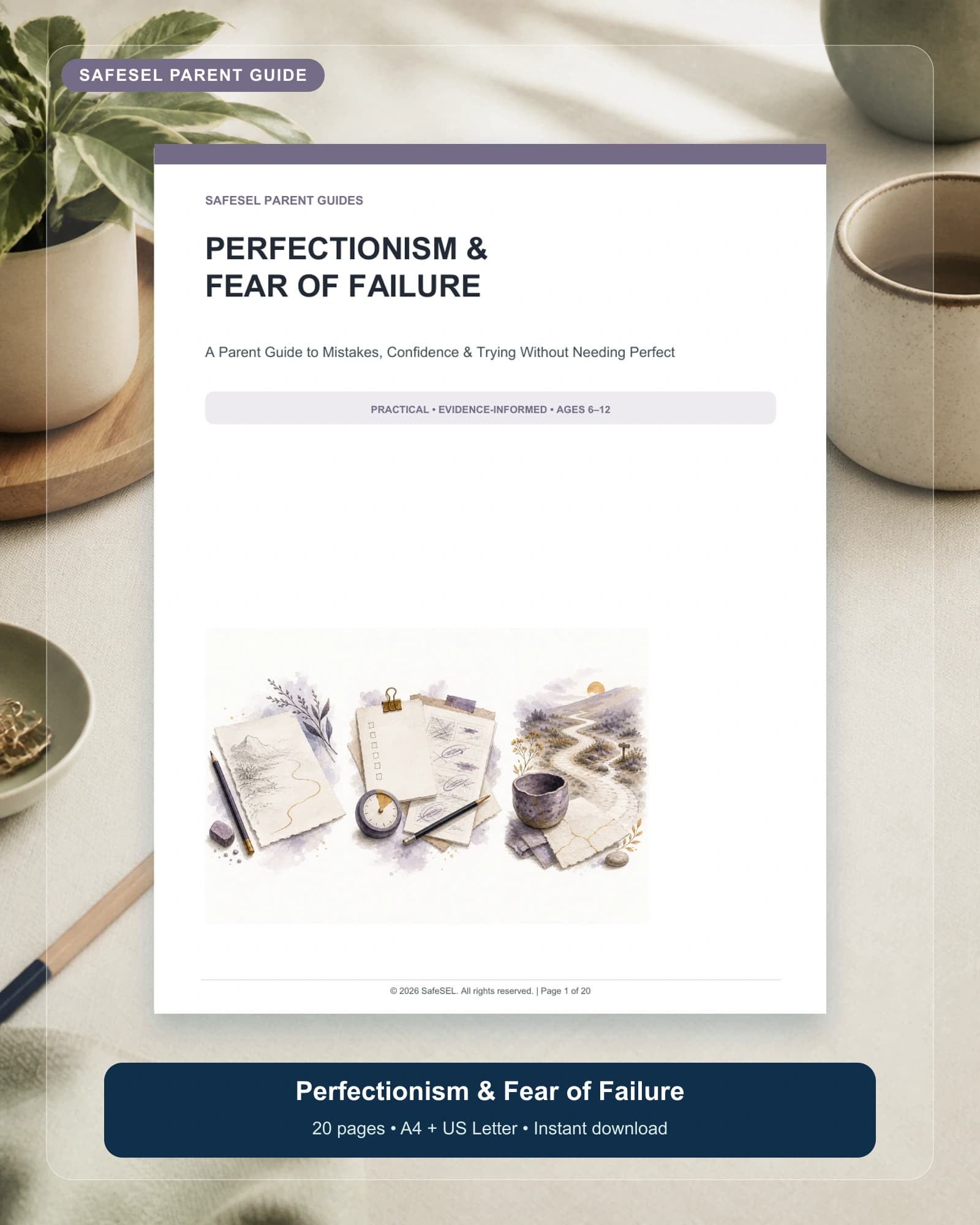
What to Say to a Perfectionistic Child Who Is Afraid of Mistakes
Replace pressure and inflated praise with accurate feedback, visible finish lines and small mistake practice for children who fear getting it wrong.
Working With Grief, Family Change and Relational Stress in Child Therapy
A structured way to assess loss, family transition, peer rupture and belonging without forcing one explanation onto the child’s response.

How to Build a Home Anxiety Support Plan for a Child
A calm, limited home plan for worry: identify one pattern, reduce unhelpful reassurance, practise a manageable step and review what changed.

A Parent Plan for Big Emotions: Before, During and After Escalation
A three-part parent plan for reducing preventable overload, protecting safety during escalation and repairing without a lecture afterward.

Why Family Routines Break Down: A Parent Troubleshooting Guide
A practical way to find the first point where mornings, homework or bedtime routines fail—and redesign the system without adding more reminders.

Supporting a Child’s Communication and Confidence After Peer Problems
How parents can listen without interrogation, clarify bullying and friendship concerns, protect safety and help a child regain confidence without taking over.

How to Plan a Professional Workshop on Child Regulation and Behavior
A facilitator framework for teaching ADHD, anger, meltdowns and emotional regulation without collapsing different needs into one behavior message.

Teaching Child Anxiety and Trauma-Informed Support Without Blurring the Concepts
How facilitators can teach anxiety, avoidance and trauma-informed principles together while preserving assessment, scope and safeguarding boundaries.